The Mysterious Iron Pillar of Delhi: 1600 Years Without Rust
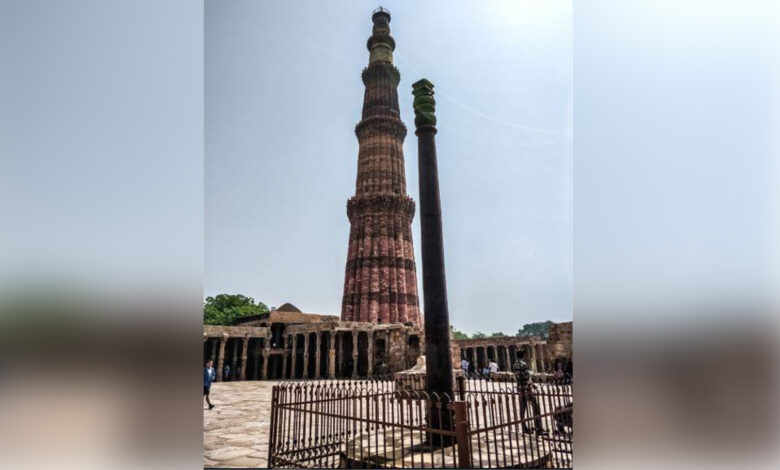
New Delhi:In the Qutub Minar complex of New Delhi stands a mysterious iron pillar that has remained free of rust for over 1600 years, despite being exposed to the open environment. This is particularly remarkable given the technology of the time, which was presumed to be less advanced. The discovery of the rust-resistant properties of the 7.2-meter tall, six-ton pillar was made in 2003 by experts from the Indian Institute of Technology (IIT) Kanpur. They found that the pillar is primarily made of wrought iron and contains a high amount of phosphorus (around 1%), unlike modern iron, which contains sulfur and magnesium in larger quantities.
In addition, ancient craftsmen used a technique called “forge welding,” in which iron is heated and hammered, preserving the high phosphorus content. This method, which is uncommon in modern techniques, is believed to have played a significant role in the pillar’s durability. According to metallurgist Ar Balasubramaniam, this unconventional method of crafting helped enhance the pillar’s strength and longevity.


The pillar’s surface also contains a thin layer of “misawite,” a compound of iron, oxygen, and hydrogen. This layer forms due to the high phosphorus content and the lack of lime, further enhancing the pillar’s resilience. Balasubramaniam praised the intelligence of ancient metalworkers, calling the pillar a “living testament to India’s ancient metallurgy.”
The pillar’s remarkable durability is also evidenced by historical events, including an incident in the 18th century when cannonballs fired at the pillar reportedly failed to break it.
While the metallurgical mysteries surrounding the pillar are fascinating, its origin remains a puzzle. One common theory links it to the Gupta Empire during the reign of Chandragupta II in the 4th and 5th centuries. According to one legend, the pillar was originally installed near the Udayagiri caves in Madhya Pradesh as a victory memorial for the Hindu god Vishnu. Another theory, proposed by heritage expert and scholar Vikramjeet Singh Rooprai, suggests that the pillar might have been purchased by the famous astronomer Varahamihira, a member of King Vikramaditya’s court.
Archaeologists have now fenced off the pillar to reduce human impact on it. Conservation architect and heritage expert Pragya Nagar has praised the efforts to preserve the pillar within the complex, despite the surrounding constructions being demolished and rebuilt over the years. She suggests that by studying the ancient techniques used to create the pillar, modern methods could be developed to create sustainable alternative materials.
The iron pillar continues to be a symbol of India’s rich metallurgical heritage, and its mystery only deepens with each passing year.