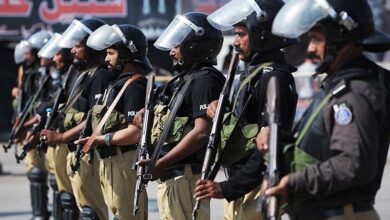
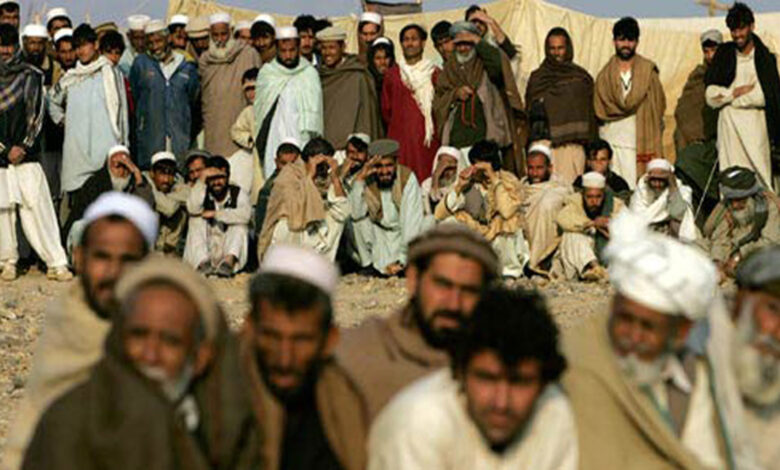
Political Parties in Balochistan Announce Nationwide Protests Over Forced Expulsion of Afghan Kidwaal Population
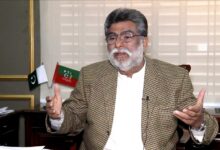
Quetta:A meeting of leaders from various political and democratic parties was held at the Arbab House in Quetta under the chairmanship of Asghar Khan Achakzai, Provincial President of the Awami National Party (ANP). The session was attended by leaders from parties such as Pashtunkhwa National Awami Party (PNAP), National Democratic Movement (NDM), Pashtun Tahafuz Movement (PTM), Hazara Democratic Party, and several others, along with representatives from trade and civil society organizations.
During the meeting, Asghar Khan Achakzai, while addressing a press conference, announced a schedule for a series of massive protests, sit-ins, rallies, and processions to be held across Balochistan. These protests will begin on **15th April (Tuesday)** in Chaman, followed by **18th April (Friday)** in Loralai, **21st April (Monday)** in Zhob, **25th April (Friday)** in Hindu Bagh (Muslim Bagh), **27th April (Sunday)** in Quetta, and culminate in a grand demonstration in Quetta on **6th May (Tuesday)**. The protests aim to demand an end to the forced expulsion of Afghan Kidwaal residents and address their worsening living conditions.
Achakzai condemned the brutal treatment and forcible evictions of the Afghan Kidwaal community by government authorities, including the police, Levies, and local administration. He strongly criticized the illegal land seizures, forced arrests, and corruption related to bribe-taking from the Afghan refugees, calling these actions “anti-humanitarian and Afghan-hostile.” He appealed to international bodies such as the United Nations (UN), UNHCR, Amnesty International, and other human rights organizations to intervene and pressurize the Pakistani government to honor its obligations under the 1951 Geneva Convention and ensure the protection of refugees.
Achakzai also slammed the recent Mineral Investment Forum held in Islamabad, declaring it unconstitutional and illegal. He stated that the forum’s push to control Balochistan’s and Khyber Pakhtunkhwa’s natural resources under the auspices of the SIFC (Special Investment Facilitation Council) was an attack on the rights of Pashtuns and Baloch people. He rejected any attempt by federal institutions to monopolize these resources and warned of potential unrest if such moves continue.
Furthermore, he condemned the ongoing detention of political leaders, including Dr. Mahirang Baloch and others, under the draconian “3MPO” law and expressed strong support for the ongoing sit-in protests in Lakhpas. Achakzai called for the immediate release of these leaders.
Achakzai also highlighted the case of **Mansoor Khan Kakr**, a nine-year-old child who has been missing for over five months. He accused the provincial government and law enforcement agencies of failure in ensuring the child’s safe return and demanded urgent action for his recovery.
In addition, the ANP leader condemned the continued detention of PTM leaders like Ali Wazir and members of the Khyber Jirga, demanding the immediate release of all PTM activists and removal of their names from the Schedule Four list of banned individuals.
Lastly, Achakzai expressed deep concern over the ongoing protests in Chaman, where thousands of residents have been demanding their rights for nearly two years without any significant action from the government. He called for the restoration of free movement across the Durand Line from Chaman to Bajaur and the complete abolition of passport requirements.
The political leaders also voiced strong objections to the harassment of the business community, particularly in the border areas where customs officials, FC, and other authorities have been obstructing trade, causing severe economic hardship. The meeting concluded with a call for an all-out political movement against the ongoing injustices faced by the Afghan Kidwaal population and various other marginalized communities in Balochistan. The political parties, in collaboration with the trader unions and human rights organizations, will reach out to international bodies to highlight these issues and demand accountability from the Pakistani government.
This unified stance represents a growing discontent with the treatment of refugees and the marginalization of local communities, signaling the beginning of a larger movement for justice and human rights in the region.