Disputes Arise Between Federal Government and Sindh Over “Safe Shaheed Canal” Project
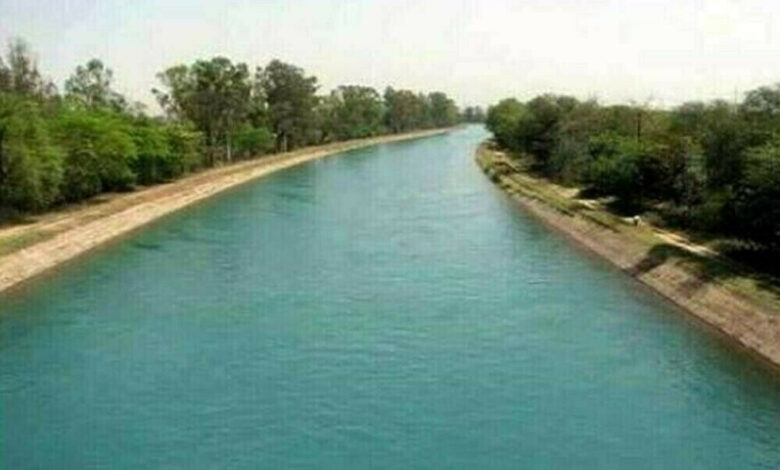
Islamabad:Pakistan’s ongoing struggle to turn barren land into arable land faces challenges due to differences between the federal government and the Sindh province regarding the construction of the *Safe Shaheed Canal*. While the federal government sees the canal project as essential for the country’s agricultural future, the Sindh government has expressed concerns over the potential impacts on the province’s water resources.
The federal government is pushing for the *Safe Shaheed Canal* as part of the Green Pakistan Initiative, aiming to convert barren areas of Cholistan into fertile agricultural land. The canal will be built along the Sutlej River, from Sulemanki Headworks to Fort Abbas, and will only utilize water from Punjab’s share of the river. With a length of 176 kilometers, the canal will use floodwater between June and October and Punjab’s share of water for the remaining two months. The project has a budget of 225.34 billion rupees, and the Punjab government has leased 1.2 million acres of land for this project.


However, the Sindh government has raised objections to this plan. According to the *Water Apportionment Accord* clause 8, provinces are allowed to start irrigation projects within their allocated water limits. The *Indus River System Authority* (IRSA) has approved the project with a 4:1 majority, and the water allocation for the Indus Basin Irrigation System has been increased. But Sindh argues that the canal could lead to further depletion of its water resources.
PPP Chairman Bilawal Bhutto Zardari has emphasized that the water issue is of utmost importance for Sindh’s people, stressing that he would raise it in the assembly. He rejected claims that his party has remained silent on the issue, stating that the matter is life and death for the people of Sindh.
Dr. Qadir Magsi, the leader of the Sindh Progressive Party, has also criticized the canal project, claiming that the people of Sindh have been protesting the plan for five months. He believes the project will contribute to the land erosion caused by the advancing sea, warning that without the river’s water flowing into the sea, Sindh’s land could become barren. He also accused the Pakistan People’s Party (PPP) of hypocrisy in its stance on water issues, claiming they have collaborated with the Pakistan Muslim League (Nawaz) on this matter.
Meanwhile, Senior Sindh Minister Sharjeel Memon firmly opposed the project, stating that no canals would be constructed on the Indus River. He highlighted the PPP’s role in halting the Kala Bagh Dam project, granting the NFC Award, and passing the 18th Amendment, emphasizing that the PPP stands against the canal project.
In response to the government’s actions, the Sindh Bar Association lawyers have decided to hold a long march from Hyderabad to Karachi to protest the canal project. The movement has also garnered support from the Sindh United Party and the Sindh River Protection Movement.
Sindh’s Culture Minister, Zulfiqar Ali Shah, made it clear that the PPP will not accept any decision against Sindh’s interests. He mentioned that the party has already voiced its opposition to the canal project at relevant forums and emphasized that the unfair distribution of water is turning Sindh’s land barren.
Protests against the canal project have been widespread in various cities, including Nawabshah, Nawabshah, Larkana, Sijawal, and Mehar, with rallies and demonstrations organized by local communities, lawyers, and students. In Nawabshah, lawyers staged a protest rally from the Judicial Complex to the Press Club, while in Larkana, they boycotted the courts for an hour in opposition to the project. In other regions like Chohar Jamali and Mehar, local residents and students also voiced their objections.
This dispute between the federal government and Sindh highlights the complexities of managing the country’s water resources and its impact on the provinces’ agricultural and ecological balance.