FBR’s Plan to Purchase 1010 Cars Faces Criticism Amid Allegations of Misuse and Lack of Transparency
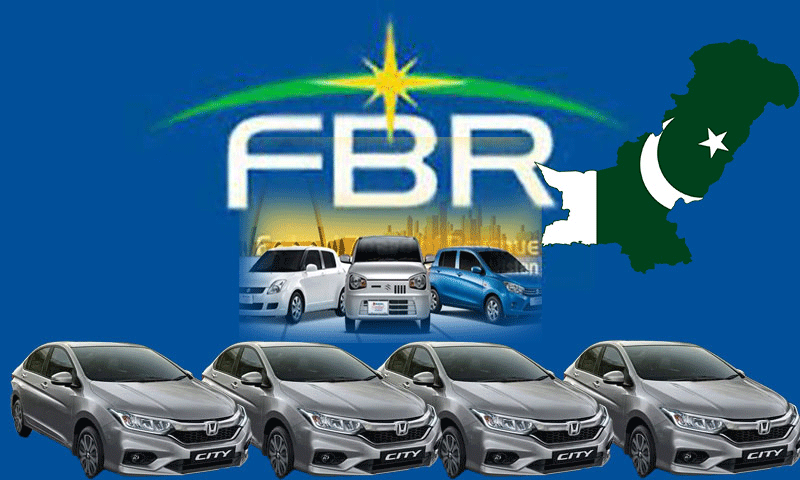
Islamabad,Pakistan:The Federal Board of Revenue (FBR) has come under scrutiny for a decision to purchase over 1,000 new cars worth more than 6 billion rupees, which has sparked criticism from the Senate Committee, the media, and politicians. The Senate Committee has directed the FBR to halt the car purchases and sought clarification on the necessity and intended use of the vehicles.
FBR Chairman, during a media interaction in Karachi, defended the decision, stating that the vehicles were essential for the operational needs of young officers, particularly in the field for tax collection and monitoring.

In response to the Senate Committee’s concerns, the FBR has clarified that the new vehicles will only be allocated to staff working in field offices. Only officers in grades 17 and 18 will have access to these vehicles, while officers in grade 19 and above will not receive any. The cars will remain the property of the FBR and will not be used for personal purposes. Additionally, to prevent misuse, FBR stickers will be affixed to the vehicles, ensuring they are used exclusively for official work.
The FBR has also detailed the purchasing process, stating that 1300cc cars have been ordered in three phases, with the first batch of 500 vehicles to be paid for with an advance payment of 3 billion rupees. The total delivery of the 1,010 vehicles will be completed between January and May 2025, with phased deliveries scheduled monthly.
Despite the explanations, the proposal has drawn sharp criticism. Senators have questioned the need for such a large fleet of vehicles, with one senator asking whether field officers previously used bicycles for tax collection. FBR officials argued that while officers are currently based in offices, they need to be in the field to conduct accurate assessments and collect taxes effectively.
Former Federal Minister Faisal Vawda raised concerns over the process, alleging that the FBR was purchasing vehicles from specific companies, calling it a potential corruption scandal. He further questioned whether the car purchases were a strategy to cover up the FBR’s tax shortfall and suggested that the procurement be halted until a competitive bidding process is introduced.
The FBR’s decision to purchase these vehicles as part of its broader strategy to meet a 1300 billion rupee tax target this year has also come under scrutiny, especially after a 600 billion rupee shortfall last year, with a significant gap in sales tax collections.
While the government maintains that the vehicles are necessary for operational efficiency, opposition voices argue that the procurement should be reassessed to ensure transparency and avoid any potential misuse of funds.