Pakistan Drafts ‘Made in Pakistan’ Policy to Boost Local Electronics Manufacturing
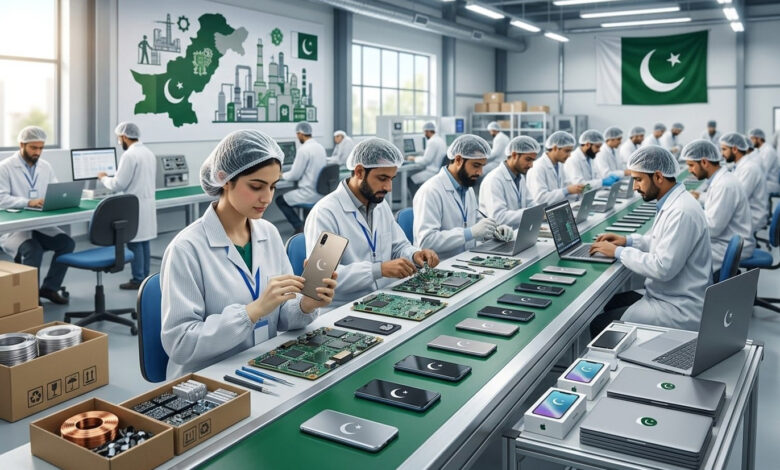
ISLAMABAD: The federal government has completed a draft of its proposed “Made in Pakistan” policy aimed at promoting the local manufacturing of mobile phones, laptops and other electronic devices while reducing the country’s import bill.
Under the proposed policy, the government plans to provide tax exemptions on raw materials used in electronics manufacturing and impose a levy of up to 5% on imported electronic equipment. However, the policy is still awaiting final approval.


The proposed initiative goes beyond mobile phones and laptops and covers a wider range of electronic products. These include signal boosters, dongles, biometric machines, point-of-sale (POS) machines, tracking systems and smartwatches.
The government aims to reduce Pakistan’s dependence on imported technology and expand the country’s domestic manufacturing base.
### Incentives for Local and Foreign Investors
The draft policy proposes full or partial tax exemptions on raw materials used in the production of electronic devices. The government also plans to facilitate the import of raw materials and heavy machinery required to establish new electronics manufacturing plants and expand existing facilities.
These incentives are intended to attract both domestic and foreign investors to Pakistan’s electronics manufacturing sector.
### 5% Levy Proposed on Imported Electronics
According to available figures, Pakistan currently imports electronic equipment worth more than $422.3 million annually. The government believes encouraging local production could help reduce pressure on foreign exchange reserves.
To give domestic manufacturers greater protection from foreign competition, the draft proposes a levy of up to 5% on imported electronic products. The measure is expected to discourage imports and create greater market opportunities for locally manufactured goods.
### Shift from Assembly to Manufacturing
Pakistan has previously encouraged local assembly of mobile phones, but the production of components and other electronic equipment has remained limited due to the absence of a comprehensive manufacturing policy.
The proposed “Made in Pakistan” policy seeks to address this gap by encouraging the development of a broader domestic electronics industry rather than relying primarily on assembly operations.
If effectively implemented, the policy could help reduce imports, create employment opportunities in the technology sector and strengthen Pakistan’s manufacturing base.
However, the draft is still awaiting final approval. Timely implementation will be crucial if the government wants to turn the initiative into a long-term strategy for making Pakistan a competitive electronics manufacturing hub.