Why Do Mosquitoes Bite Some People More Than Others? Scientists Explain
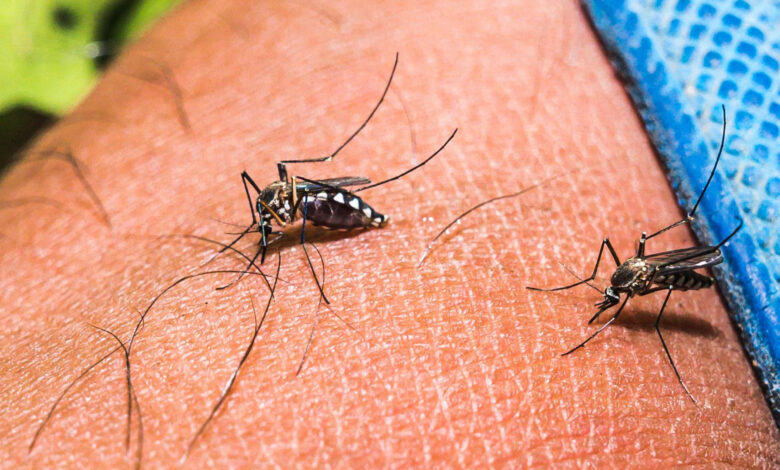
Karachi: If you’ve ever wondered why mosquitoes seem to target you while leaving everyone else alone, science has an answer. Researchers say that several biological factors—including body odor, carbon dioxide production, body temperature, and genetics—can make some people significantly more attractive to mosquitoes than others.
Only female mosquitoes bite humans because they require proteins from blood to develop their eggs. To locate their targets, mosquitoes rely on a combination of visual cues and chemical signals emitted by the human body.


Carbon Dioxide Plays a Major Role
Mosquitoes can detect carbon dioxide (CO₂) exhaled by humans from as far as 10 meters away. The gas acts as a signal that a potential blood meal is nearby.
Adults typically produce more carbon dioxide than children, making them more attractive to mosquitoes. Pregnant women are especially vulnerable because they exhale greater amounts of CO₂ and have higher body temperatures due to increased metabolic activity.
Scientists also use carbon dioxide in mosquito traps, demonstrating how strongly the insects are drawn to it.
Body Heat Attracts Mosquitoes
Mosquitoes are naturally attracted to warmth and humidity. People with higher body temperatures are more likely to be bitten.
Exercise can temporarily increase a person’s attractiveness to mosquitoes because it raises body temperature, boosts carbon dioxide production, and causes sweating. Similarly, individuals with larger body sizes tend to generate more heat and exhale more CO₂, increasing their chances of attracting mosquitoes.
Your Skin’s Unique Smell Matters
Experts say that body odor is one of the most important factors influencing mosquito attraction.
Human skin releases hundreds of volatile organic compounds (VOCs), including ammonia, lactic acid, and carboxylic acids. Mosquitoes can detect and distinguish these chemical signatures.
A study conducted by researchers at Rockefeller University analyzed the body odors of 64 individuals and found that people with higher levels of carboxylic acids on their skin were far more attractive to mosquitoes. In some cases, the most attractive individuals were up to 100 times more appealing to mosquitoes than others.
Scientists have also debunked the popular myth that mosquitoes prefer people with “sweet blood.” Instead, they are attracted to specific chemical compounds produced by the skin and the microorganisms that live on it.
Skin Bacteria and Genetics Influence Mosquito Attraction
The skin microbiome—the collection of bacteria naturally present on human skin—plays a significant role in producing body odor. Research has shown that individuals who attract more mosquitoes often have different skin bacteria compared to those who are bitten less frequently.
Studies involving identical twins have found that mosquitoes are similarly attracted to genetically identical individuals, suggesting that mosquito attractiveness may be partly inherited.
Not Everyone Reacts the Same Way
Even when two people are bitten the same number of times, their bodies may react differently. Some individuals develop large, itchy swellings that last for days or weeks, while others experience only minor redness.
Scientists have discovered that genetic factors linked to the immune system influence how severely a person reacts to mosquito bites. People who experience stronger allergic reactions may believe they are bitten more often simply because the symptoms are more noticeable.
Protection Is Still Important
Researchers emphasize that no one is completely immune to mosquito bites. Even people who believe mosquitoes rarely bite them should take preventive measures, particularly in areas where mosquito-borne diseases such as dengue fever and malaria are common.
The findings highlight that mosquito attraction is largely determined by biology rather than blood type or myths about having “sweet blood,” making body chemistry the real reason why some people are irresistible to mosquitoes.