Rising U.S.-Iran Tensions Push Oil Prices Higher, Rattle Global Financial Markets
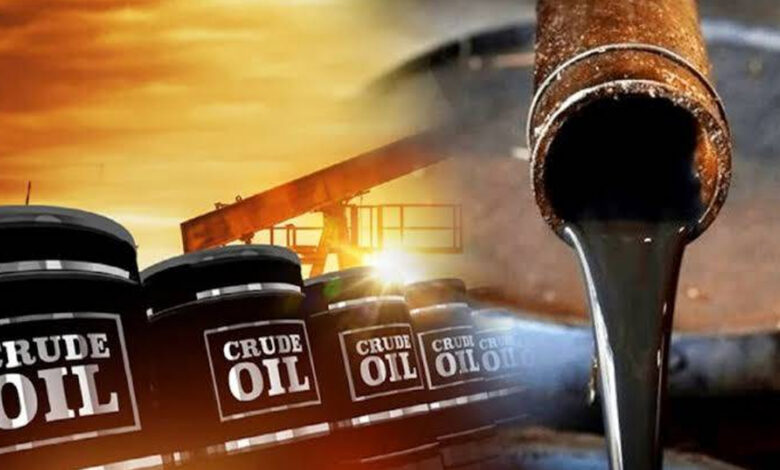
ISLAMABAD:Escalating military tensions between the United States and Iran have shaken global financial markets, sending oil prices to multi-month highs and increasing uncertainty among investors worldwide.
In international trading, **Brent crude** climbed nearly **4%** to **$87.33 per barrel**, marking its highest level in months. **West Texas Intermediate (WTI)** also gained about **4%**, trading at **$82.09 per barrel**.
Other key oil benchmarks recorded similar gains, with **Murban crude** reaching **$80.77 per barrel** and **WTI Midland** rising to **$81.81 per barrel**.
Market analysts said investors accelerated purchases amid fears that worsening geopolitical tensions in the Middle East could disrupt global energy supplies.
The price surge extended beyond crude oil. U.S. gasoline futures, Dutch TTF natural gas, U.S. natural gas, and the Japan-Korea LNG benchmark also recorded notable increases.
Analysts attributed the rally to growing concerns that any further escalation could disrupt oil and gas shipments through the **Strait of Hormuz**, a critical maritime route that handles a significant share of the world’s energy exports.
Higher energy prices also weighed on investor sentiment. On Wall Street, the **S&P 500**, **Nasdaq**, and **Dow Jones Industrial Average** opened lower, while major European markets, including Germany and France, also declined. Britain’s stock market received some support from gains in major energy companies.
Asian markets also came under pressure, with stock exchanges in **Japan, South Korea, and China** posting losses, particularly in technology and semiconductor sectors.
Economists warned that if crude oil prices remain close to **$90 per barrel**, oil-importing countries such as **Pakistan** could face serious economic challenges, including a higher import bill, a widening current account deficit, increased pressure on the national currency, and rising inflation.
Investors at the **Pakistan Stock Exchange (PSX)** also remained cautious, amid concerns that persistently high energy prices could negatively affect the country’s economy, public finances, and the cost of essential goods.
Economic analysts said the future direction of global markets will largely depend on whether the current U.S.-Iran confrontation remains contained or develops into a broader regional conflict. They warned that any disruption to tanker traffic through the **Strait of Hormuz** could drive oil prices even higher, with significant consequences for inflation and financial markets around the world.