IMF Raises Concerns Over Suspicious Transactions in Pakistan’s Real Estate Sector
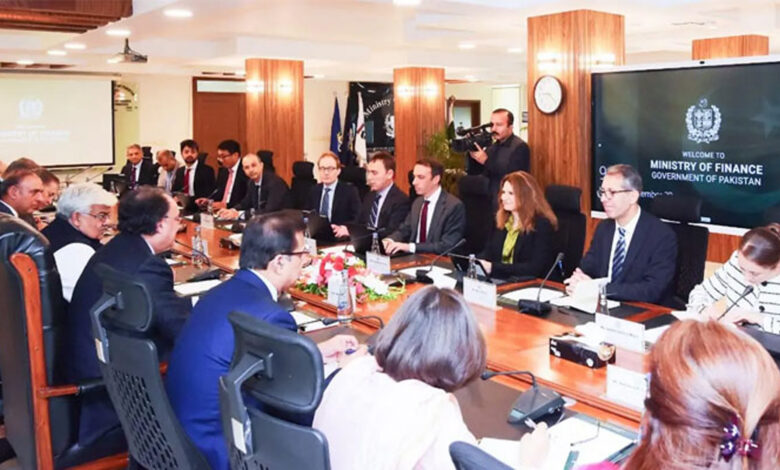
ISLAMABAD: The International Monetary Fund (International Monetary Fund) has expressed concern over declining reports of suspicious transactions in Pakistan’s real estate sector and has urged stronger measures to curb trade-based money laundering and prevent misuse of legal entities.
According to official sources, the IMF has asked Pakistan to address the low number of suspicious transaction reports (STRs) originating from the real estate sector and improve the system for sharing beneficial ownership information to ensure transparency in financial dealings.


The IMF also highlighted rising risks of trade-based money laundering and stressed the need for tighter controls on financial flows linked to trade activities.
Sources confirmed that the IMF has approved the release of the fourth tranche worth $1.1 billion under the Extended Fund Facility for Pakistan, while simultaneously flagging governance and compliance concerns.
The Fund noted that designated non-financial businesses and professions (DNFBPs), including real estate agents, are generating very few STRs despite widespread concerns that illicit wealth and tax evasion proceeds are being absorbed into the property market.
The Federal Board of Revenue (FBR) has recently conducted raids on major real estate societies over allegations of undeclared sales and concealed income. Authorities had earlier designated DNFBPs as reporting entities required to submit suspicious transaction reports to the Financial Monitoring Unit (FMU).
However, IMF observers pointed out that the institutional framework has not yet produced adequate reporting levels, raising concerns about enforcement gaps.
The Pakistani delegation shared updates on its National Risk Assessment and coordination with the National Anti-Money Laundering and Counter Financing of Terrorism Authority. The government reiterated its commitment to strengthening anti-money laundering (AML) and counter-terror financing (CFT) systems.
Efforts are also underway to improve the accuracy of beneficial ownership data in the Securities and Exchange Commission of Pakistan (SECP) central registry to prevent misuse of corporate structures.
Officials said the FBR, FMU, and DNFBPs are working jointly to address low STR reporting, with planned reforms including improved reporting frameworks and mandatory registration requirements.
The IMF also highlighted concerns related to trade-based money laundering during recent review discussions. The State Bank of Pakistan had earlier issued a comprehensive framework in August 2025 to help authorized dealers assess and monitor such risks.
Authorities added that coordination between financial intelligence units and customs agencies is being strengthened, with further integration of forex reporting, import payments, and customs data planned to improve oversight of cross-border financial flows.