Balochistan Assembly Has Failed to Solve Public Problems; Government and Friendly Opposition Are Merely Busy Collecting Privileges: Maulana Hidayat-ur-Rehman
Sardari and Nawabi System Is Imposed With the Support of the Establishment; We Will Form a Cell Against Oppression of the People; Democracy Was Buried by Suppressing the Resolution: Press Conference
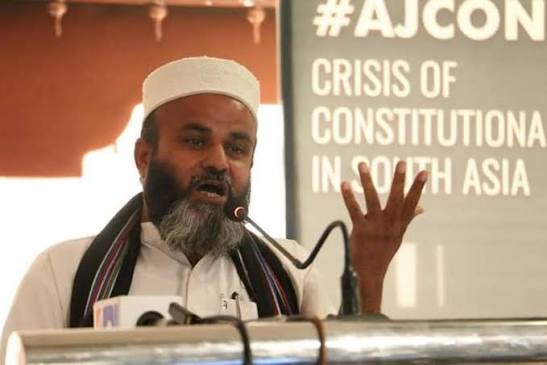
QUETTA (Daily Qudrat Quetta): Jamaat-e-Islami Balochistan Ameer and MPA Maulana Hidayat-ur-Rehman has said that he has come to present the Balochistan Assembly’s two-and-a-half-year performance before the people. He tried to highlight public issues in the Assembly, and despite the people’s difficulties, the opposition did not see anything during this period. He alleged that the current opposition is not friendly but its role is something else; opposition members, like ministers, receive privileges and benefits.
Addressing a press conference in Quetta, Maulana Hidayat-ur-Rehman strongly criticised the Sardari and Nawabi system, saying he is opposed not to the tribal system but to the Sardari system imposed during the Sandeman era. According to him, during the British era, certain Sardars and Nawabs were given privileges and salaries under specific agreements, and they received compensation in exchange for pulling the British officials’ carriages. He claimed that the Sardari and Nawabi system stands with the support of the establishment, but this system is now losing its grip.

He said that such systems have been abolished across Pakistan, and in Balochistan too, existing laws should be implemented. If there is no legal basis for the titles of Sardar and Nawab, they should be abolished, and the individuals concerned should not receive government privileges either. According to him, the Balochistan Assembly should not have the authority to reject the resolution regarding the abolition of the Sardari system.
Maulana Hidayat-ur-Rehman said he has reservations about the attitude of members of various parties, including the Muslim League, PPP and Awami National Party, during the Assembly debate on the resolution against the Sardari system. He alleged that JUI members felt more pain over the matter of the resolution. He said the Speaker was allowing him to speak, but the Leader of the Opposition created obstacles. He raised the question: if an elected representative is not given the opportunity to speak in the Assembly, what kind of democracy is this? He also referred to Dr Abdul Malik Baloch’s walkout and said that the same reaction was not seen on other matters, including the Mines and Minerals Act and resolutions against terrorism, as was seen on the Sardari system resolution.
He claimed that the opposition did not react to incidents involving JUI workers in Khuzdar, Nushki and Turbat in the way it reacted to the Sardari system resolution. Maulana Hidayat-ur-Rehman said he has again submitted a resolution against the Sardari system in the Assembly and will not heed any pressure or fear on this matter.
The Jamaat-e-Islami provincial Ameer said that if any Sardar or Nawab in Balochistan oppresses a poor person, he will side with the oppressed. For this purpose, a cell will be established where efforts will be made to secure justice for affected individuals at every level. He said he will continue to play his role for the protection of the people’s rights.
Maulana Hidayat-ur-Rehman also claimed a fine of Rs30 million was imposed on Nawab Sanaullah Khan over the construction of a school, and said that in the past Nawab Yousuf Magsi and other figures also opposed the Sardari system. He said he will not be intimidated by anyone and will continue to raise his voice for the people’s rights.
He also demanded that Jamaat-e-Islami reflect on the role of its assembly members and consider the need for their political and democratic training. He said that before the Sardari system there was a tribal system, while according to him, after the Sandeman era, Sardars gained the authority to rule, and later Nawab Yousuf Magsi resisted this system.
Maulana Hidayat-ur-Rehman further said he will continue to raise his voice against the injustices done to the people of Balochistan, and in the event of any influential person oppressing the poor, he will take measures according to available resources to help the victims.


