Iran Denies Closing Borders with Pakistan
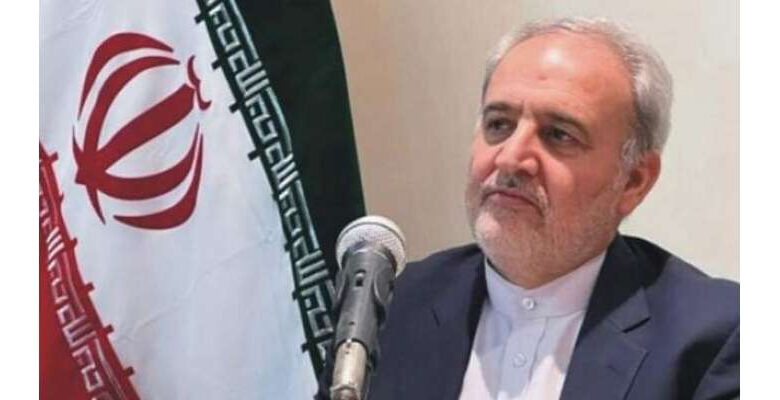
ISLAMABAD (Qudrat Daily) – Iran’s Ambassador to Pakistan, Reza Amiri Moghaddam, has rejected reports that Iran has closed its borders with Pakistan, clarifying that the Iranian government has not imposed any restrictions on the export of any goods to Pakistan, including LPG. Iran’s borders with all its neighbouring countries remain open; however, changes in Pakistan’s E-Form import procedure have created serious difficulties in the movement of goods between the two countries.
In a detailed statement issued on the social media website X on Sunday, the Iranian ambassador said that in the current regional circumstances, closing borders with neighbouring countries—especially the brotherly country Pakistan—would be neither logical nor in the interest of any party.

Reza Amiri Moghaddam clarified that there is no restriction from Iran on the export of LPG and other Iranian products to Pakistani traders, but changes in the implementation of the E-Form procedure for imports in Pakistan have created a situation in which traders are practically unable to dispatch goods from Iran to Pakistan.
Hundreds of Trucks Loaded with LPG Awaiting Clearance for Weeks
The Iranian ambassador said in his statement that according to reports received, several hundred trucks loaded with LPG have entered Pakistani territory from Iran’s Rimdan border via Gabd; however, despite several weeks passing, neither has the goods on these trucks been unloaded nor have they been provided the necessary clearance. This situation has further complicated the movement of commercial goods between the two countries, and consultations with Pakistani authorities are ongoing to resolve the issue.
Clarification Regarding Reports on the Closure of Iranian Borders to Pakistan
With regard to reports concerning the closure of Iranian borders to Pakistan, I would like to clarify a few important points here:
First, there are currently no restrictions on the Iranian side on the export of Iranian goods to Pakistan, including LPG.
Iran’s borders with all its neighboring countries remain open.
Naturally and rationally, under the prevailing circumstances, it would be neither logical nor in the interests of either side for Iran to close its borders to its immediate neighbors, particularly brotherly Pakistan.
Second, changes in the implementation of Pakistan’s E-Form procedure for imports from Iran have created a situation in which traders are effectively and literally unable to dispatch cargo from Iran to Pakistan.
Consultations with the Pakistani side are currently underway to address this issue.
Third, according to reports, several hundred trucks carrying LPG have crossed the Rimdan border into Gabd on the Pakistani side.
However, despite having remained there for several weeks, these trucks have yet to be unloaded or cleared, further complicating the movement of goods and the smooth flow of bilateral trade.
Finally, I would like to emphasize that cross-border trade between Iran and Pakistan is an integral part of the bilateral agreements reached at the highest levels. It serves the mutual interests of both countries and their people.
Iran has made every possible effort, leaving no stone unturned, to facilitate and promote this essential bilateral trade.
We remain committed to continuing these efforts in close coordination with our Pakistani counterparts to overcome existing challenges, facilitate the movement of goods, and strengthen economic cooperation between our two brotherly countries.
— Reza Amiri Moghadam (@IranAmbPak) October 25, 2026
Pakistan Partially Restores Trade at Gabd-Rimdan Border Crossing
Meanwhile, according to a report in the Pakistani newspaper Dawn dated 25 October, Pakistan has resumed trade activities at the Gabd-Rimdan border crossing in Balochistan’s Gwadar district on Saturday after a one-week suspension. Initially, the movement of those commercial goods was allowed whose consignment notices were dated 16 October or earlier. Mir Naveed Jan Kalmati, President of the Gwadar Chamber of Commerce and Industry, also confirmed the restoration of trade at the border crossing.
However, the Iranian ambassador’s latest statement indicates that despite the resumption of movement at the border crossing, issues related to the clearance of LPG trucks and import documents have not been fully resolved. A fresh position from Pakistani authorities on the ambassador’s specific objections is yet to emerge.
Changes in E-Form Affect LPG Supply
Another Dawn report revealed that Pakistan’s Ministry of Commerce had withdrawn certain exemptions in mid-October for the Electronic Import Form for imports from Iran, after which border trade was affected and a large number of commercial vehicles were stranded.
International news agency Reuters reported on 23 October that due to disruptions in border trade, concerns arose in Pakistan about LPG shortages and price increases. According to traders, thousands of tons of LPG are imported daily from Iran into Pakistan, a large portion of which arrives via Gabd-Rimdan.
Pakistani authorities had previously cited security and anti-smuggling concerns regarding border restrictions, while Iranian authorities have consistently linked these obstacles to technical and administrative issues.
Reference to High-Level Agreements Between Pakistan and Iran
In his statement, Iranian Ambassador Reza Amiri Moghaddam emphasised that border trade between Pakistan and Iran is an important part of the bilateral agreements reached at the level of the top leadership of both countries, and its continuation is in the mutual interest of both countries and their peoples.
He said that Iran has made every possible effort to facilitate and promote this essential trade and will continue to take steps to remove the current difficulties through close contact and cooperation with Pakistani authorities in the future as well.
The Iranian ambassador’s statement makes clear that Tehran is linking the current obstacles in border trade to Pakistan’s import and clearance procedures rather than to any closure of borders by Iran. Meanwhile, despite Pakistan’s partial restoration of trade at the Gabd-Rimdan crossing, the situation regarding the clearance of all pending goods and the full restoration of normal trade activities is yet to become clear.


