Pashtunkhwa National Awami Party Demands Immediate Withdrawal of Emergency, Governor’s Rule in KP
QUETTA: The Pashtunkhwa National Awami Party (PNAP) has strongly condemned the imposition of an emergency and Governor’s Rule in Khyber Pakhtunkhwa, describing the measures as unconstitutional, undemocratic and a direct assault on provincial autonomy and the public mandate. The party has demanded their immediate withdrawal and the restoration of the elected provincial government’s constitutional powers.
In a statement issued by its central secretariat, the party said there was no constitutional or legal justification for imposing an emergency or Governor’s Rule in the province. Removing an elected provincial government on the basis of political differences or the vested interests of federal rulers, it said, would constitute a clear violation of democratic principles, constitutional supremacy and the people’s right to self-governance.
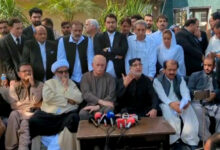

The statement stressed that the federal government had a constitutional responsibility to respect the mandate given by the people of Khyber Pakhtunkhwa through their votes.
The party questioned the federal government’s justification for the measures on the grounds of law and order or an alleged absence of the government’s writ. It pointed to the security situation in Balochistan and other parts of the country, where, according to the statement, people were facing severe insecurity, terrorism and serious challenges to the writ of the state.
The party said the decision to target Khyber Pakhtunkhwa despite these circumstances raised serious questions, alleging that political interests and attempts to gain control over the province’s resources were behind the move.
The statement further alleged that measures aimed at dividing Khyber Pakhtunkhwa or gaining control over the natural resources of its mineral-rich areas would violate the rights of the federating units, provincial autonomy and the fundamental principles of the federal system.
It maintained that the people of every province had the fundamental right to determine the future of their resources, political system and elected government, adding that these rights could not be taken away under any circumstances.
The PNAP also criticised the federal government’s constitutional and legislative policies, arguing that the 26th and 27th Constitutional Amendments had raised serious questions about the balance of constitutional and democratic institutions and the independence of the judiciary. It further alleged that attempts had been made to curtail the powers and rights granted to the federating units under the 18th Constitutional Amendment, while the Prevention of Electronic Crimes Act (PECA) had been used to restrict freedom of expression and press freedom.
According to the party, the imposition of an emergency and Governor’s Rule against an elected provincial government represented a continuation of this approach and risked weakening democratic institutions and Pakistan’s federal parliamentary system.
The statement described judicial independence, constitutional supremacy and a free press as fundamental pillars of a democratic society. It said that independent and effective courts, together with institutions fulfilling their constitutional responsibilities, were essential for ensuring legal and constitutional accountability.
However, the party expressed concern that questions surrounding judicial independence, civil liberties and media freedom had further weakened the democratic system.
The PNAP emphasised that the 18th Constitutional Amendment was a significant safeguard for provincial autonomy and the rights of the federating units within Pakistan’s federal parliamentary framework. Actions contrary to the spirit of the amendment, it warned, would undermine trust between the federal government and the provinces.
The party said federal and provincial political leaders had no right to undermine the democratic rights and collective national interests of the people of the Pashtunkhwa homeland for political gain.
The statement also strongly criticised the Pakistan Peoples Party (PPP), questioning its role in the reported imposition of Governor’s Rule in Khyber Pakhtunkhwa.
It described the development as particularly regrettable because the PPP had historically campaigned for the restoration of democracy, constitutional supremacy and the protection of elected governments, making significant sacrifices in the process.
The party questioned the constitutional and democratic justification for the measure, noting that President Asif Ali Zardari, who belongs to the PPP, had signed the order imposing Governor’s Rule against the elected provincial government.
It said the PPP leadership must explain how the decision could be reconciled with the president’s constitutional responsibility to protect the Constitution and uphold democratic values.
The PNAP urged the PPP to learn from its historical struggle and sacrifices, including those of former prime minister Zulfikar Ali Bhutto and former prime minister Benazir Bhutto. It said the party’s legacy should require it to oppose undemocratic measures rather than support the removal of an elected government’s powers.
The statement added that political parties claiming to represent democratic values had a responsibility to adopt a clear and principled position in defence of elected governments, constitutional rights and the parliamentary system.
It warned that undemocratic measures ultimately harmed even those political forces that supported them for short-term political gains.
The Pashtunkhwa National Awami Party demanded the immediate withdrawal of the emergency and Governor’s Rule in Khyber Pakhtunkhwa, restoration of the constitutional and democratic powers of the provincial assembly and elected government, and full respect for the people’s mandate.
The party concluded that it would not accept what it described as unconstitutional and undemocratic measures and would continue its struggle to protect the rights of the federating units, provincial autonomy, democracy, constitutional supremacy and the people’s right to self-governance.