Balochistan Government’s Audit Report for Fiscal Year 2024-25 Released; Financial Mismanagement and Irregularities of Over Rs23 Billion Identified
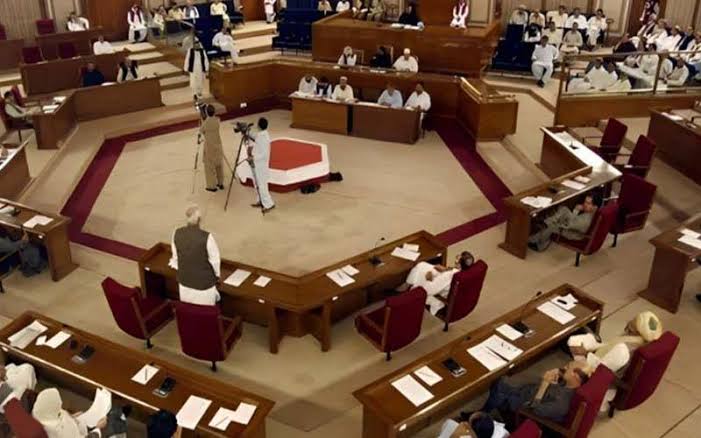
QUETTA (Daily Qudrat Quetta) — During the audit of the Balochistan government for fiscal year 2024-25, irregularities of more than Rs37 billion 756.1 million were revealed, while as a result of the audit, recoveries of Rs23 billion 381.0 million were identified.
According to the audit report of the Balochistan government’s budget for fiscal year 2024-25, during the audit, irregular expenditures of Rs11 billion 883.615 million were found in 149 cases, recoverable amounts of Rs21 billion 489.227 million in 28 cases, overpayments of Rs1 billion 891.684 million in 31 cases, failure to produce records in 6 cases, suspicious expenditures of Rs55.527 million in 2 cases, and government losses of Rs391.198 million in 6 cases were identified.

According to the audit report, during fiscal year 2024-25, the total receipts of the Balochistan government were Rs918 billion 331 million, while against this, expenditures of Rs866 billion 560 million were made, as a result of which savings of Rs51 billion 771 million were achieved.
According to the report, the government’s expenditure on development activities was only 36 percent of the total development allocation. During the audit, numerous irregularities were identified regarding the allocation of funds in the PSDP. According to the report, despite the existence of numerous ongoing schemes, including more schemes increased pressure on the national exchequer and ongoing schemes also suffered from reduced attention.
According to the audit report, as a result of this practice, 198 schemes were abandoned or limited, the cost of which was Rs17 billion 204 million. The report attributed the reasons for this to wrong priorities and allocation of funds on political grounds, as a result of which wastage of resources was identified.
According to the report, 134 development schemes were delayed, due to which time overruns ranging from several months to several years came to light, while the cost increased by Rs12 billion 672.964 million.
According to the audit, despite these delays, the government did not impose penalties or liquidated damages of Rs4 billion 764.255 million on contractors, suppliers, and vendors under Clause 70.1 of the General Conditions of Contract.
The report further said that in fiscal year 2024-25, most sectors received only one to two percent of the total allocation of development funds. The absence of development schemes in these sectors is a cause for concern regarding their progress and development.
On the other hand, a major portion of the total amount of new PSDP schemes was given to only four departments. The Public Health Engineering Department, the Communications and Works Department, the Local Government Department, and the Irrigation Department were provided 72 percent of the total allocation for new schemes.
The audit report said that due to the absence of a proper internal control system in the departments and institutions of the provincial government, numerous problems came to light in the use of government resources.
According to the report, these problems include insufficient efforts and a weak system for increasing government receipts, improper or lack of maintenance of stock accounts, non-recovery of government dues, non-transparent procurement of stores, failure to implement prescribed procedures on development schemes, delays in completion of projects, increase in time and cost due to inadequate and untimely funding and weak implementation.
According to the audit, weak budget planning, payments to Drawing and Disbursing Officers (DDOs) instead of vendors, retention of government funds in commercial banks, poor management of government assets, absence of the Asset Module in SAP, violation of contractual obligations, failure to produce records, repeated occurrence of irregularities, and overpayments to contractors and vendors are also among the major problems.
The audit report recommended that failure to produce records is a serious irregularity that hinders the audit process, therefore concerned Principal Accounting Officers (PAOs) should take departmental action against officials responsible for not producing records.
The report said that inquiries should be conducted to determine responsibility for government losses and irregular expenditures, and prevention of such irregularities should be ensured through strong internal control and monitoring.
The audit also recommended that concerned Principal Accounting Officers take effective measures for the recovery of overpaid amounts and government dues.
The report urged the Principal Accounting Officers of revenue-collecting departments to make serious and effective efforts for the timely recovery of outstanding government receipts.