Pashtunkhwa’s National Unity Torn Apart by Political and Administrative Divisions: Terrorism and Unrest Have Paralysed Public Life and the Economy; Policies Imposed Against the People’s Will Are Unacceptable, Says Pashtunkhwa NAP
Quetta (Daily Qudrat Quetta): A closed-door session of the Pashtunkhwa National Awami Party’s Ghousabad–Lor Karez regional conference was held at Ahmadan Scheme, Ghousabad, under the chairmanship of the party’s provincial president, Nasrullah Khan Zere. Hundreds of delegates, workers and office-bearers from across the area attended.
Those present included provincial deputy secretary Ali Muhammad Tareen, Abdul Razzaq Khan Barech, Ubaidullah Tokhi, district assistant secretary Muhammad Rasool Tareen, Syed Abdullah Agha, Ismatullah Tareen, district committee members Gul Shaheen and Fareed Kamal, district assistant secretary Aminullah Kakar, Rozi Khan Khalji, Hafiz Salam Barech and other leaders. District senior assistant secretary Nida Sangar served as secretary of the meeting.
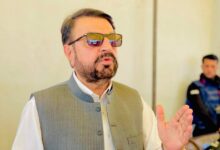
At the opening of the conference, regional senior assistant secretary Munir Ahmad Khaplawak presented a detailed report on organisational and political performance over the past three years, covering political, organisational and public activities, party programmes and organisational progress. Hundreds of delegates reviewed the report and, after discussion, approved it unanimously.
A new regional executive for Ghousabad–Lor Karez was then elected. Haji Naqeebullah Mehrban was elected regional secretary and Munir Ahmad Khaplawak senior assistant secretary. Gul Shaheen, Shah Jahan Tareen, Dr Tahir Shahab, Muhammad Ismail Hashmi, Haji Shah Agha, Bashir Ahmad Wardak, Jumma Khan Popalzai, Hameedullah, Noor Agha Muslim Yar, Haji Habibullah and Hafeez Jan were elected members of the regional executive. Provincial president Nasrullah Khan Zere administered the oath to the newly elected office-bearers.
In the open session, provincial president Nasrullah Khan Zere, provincial deputy secretary Ubaidullah Tokhi, district assistant secretary Ismatullah Tareen, provincial deputy secretary Ali Muhammad Tareen, Dr Fazlullahi Patman, Gul Shaheen and other leaders addressed the conference. Shah Agha recited verses from the Holy Quran. The party’s national anthem was presented at the start, and participants stood in respect. Dr Tahir Shahab also recited a poem.
Speakers congratulated the outgoing regional cabinet, organisers, workers and delegates on a successful and well-attended conference. They said the large turnout of hundreds of delegates in an important area such as Ghousabad–Kot Karez was clear proof that the area remains a key centre of the party’s political and organisational activity. Organised participation and political awareness, they said, showed that the people believe in organised political struggle for their national, political, democratic and economic rights.
Speakers said history shows that nations have secured national sovereignty, genuine democracy, political and democratic authority, and fundamental rights through organised political parties and strong organisations. A political organisation is the foundation of any national movement, and organised workers alone can sustain a political struggle. The Pashtunkhwa National Awami Party would continue to strengthen its structure on the basis of its ideology, constitution and manifesto, and further organise the party through successful conferences at regional, district and provincial levels.
They said Pashtunkhwa was facing grave political, economic, social and law-and-order problems. Its national unity had been torn apart through various administrative and political divisions, making it harder for the Pashtun nation to secure its collective political, economic and national rights. The party, they said, would continue its principled struggle for Pashtun national unity, national identity, democratic rights, provincial autonomy and the people’s right to rule.
Speakers said terrorism and unrest in Pashtunkhwa had severely affected people’s lives, businesses, education and economic activity. Ending this situation, they said, required lasting peace, political stability and protection of fundamental rights. The people’s right over the resources and natural wealth of Pashtunkhwa must be recognised, and no policy should be imposed by ignoring the will and interests of the people.
They said the Pashtun nation must strengthen mutual unity and political organisation to protect its national interests. National unity was essential to any nation’s progress and survival, and the party would widen its democratic and political struggle by organising its workers.
Stressing education, speakers said knowledge and learning were the basic means of a nation’s progress. Collective efforts were needed to end educational backwardness in Pashtunkhwa, improve schools and educational institutions, and equip the new generation with modern education. They urged parents and political workers to give special attention to their children’s education, saying that only through knowledge and awareness could the younger generation better understand its national, political, constitutional and human rights and play an effective role in securing them.
Speakers described successful regional conferences as important milestones in the party’s organisational journey, and said the Ghousabad–Lor Karez conference had again shown that a strong organisation, active workers and political awareness could further strengthen the party among the people. Congratulating the newly elected regional executive, they expressed the hope that the new cabinet would discharge its responsibilities in line with the party’s constitution, manifesto and organisational decisions, highlight the problems of the local people, and make the party’s political and organisational activities more effective.