Jirga slams transfer of civilian powers to non-civilian forces, rejects illegal mineral land allotments
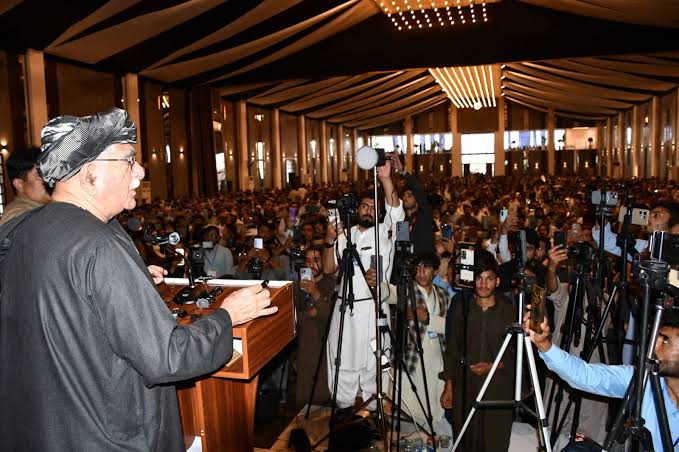
QUETTA: A three-day jirga of the people of southern Pashtunkhwa and the Pashtun nation has strongly condemned the paralysing of civilian authority in Balochistan and the transfer of constitutional and administrative powers to non-civilian or semi-paramilitary forces, demanding immediate restoration of the elected government’s and civilian administration’s constitutional powers.
The jirga was held in Quetta on August 30–31 and September 1, 2026, on the invitation of Pashtunkhwa Milli Awami Party chairman, Tehreek Tahaffuz-e-Aain Pakistan chief and Leader of the Opposition in the National Assembly Mahmood Khan Achakzai, in the light of decisions of the Bannu Jirga of March 11–14, 2022. It was presided over by PkMAP central secretary Nawab Muhammad Ayaz Khan Jogezai. Central general secretary Abdul Rahim Ziaratwal obtained approval of the unanimous resolutions.

Political and social leaders, tribal elders, intellectuals, lawyers, youth, women, workers, farmers, traders, journalists and representatives of other walks of life from various districts reviewed the political, constitutional, law-and-order, economic, social and national situation, particularly in Pashtun areas.
In a unanimous declaration, the jirga also rejected illegal allotment of hundreds of thousands of acres of land in the name of minerals and demanded an end to enforced disappearances and the blocking of Computerised National Identity Cards.
It expressed grave concern over deteriorating law and order in southern Pashtunkhwa, especially Dukki, Harnai, Ziarat, Quetta, Hanna Urak, Mangai, Mangla, Pishin, Saranan, Sra Ghurgai, Ziarat Cross, Qilla Abdullah Khan, tehsil Gulistan, Malezai, Muhammadzai and Mezai Adda, and condemned all forms of terrorism, extremism, proxies, armed operations, target killings, abduction for ransom, extortion and state and non-state violence.
The jirga demanded that protection of citizens’ lives and property be ensured as the state’s foremost duty and that indiscriminate, effective and sustained action be taken under the law against terrorism and crime.
It condemned rising insecurity on major provincial highways, including Quetta–Karachi, Quetta–Chaman, Quetta–Dera Ghazi Khan, Quetta–Dera Ismail Khan, Quetta–Taftan, Quetta–Ziarat and Quetta–Harnai, where incidents of burning and looting of goods vehicles, robbery and killing of passengers and abduction for ransom have increased. It demanded that national highways and trade routes be made secure immediately and that travellers, traders and transporters be given effective protection.
Declaring the Constitution the basic social contract between the state and all its units, the jirga demanded its supremacy and full implementation. All state institutions, it said, must work within constitutional limits, parliamentary supremacy must be ensured, democratic institutions strengthened and the independence of the judiciary, Election Commission and media respected. It called respect for the people’s genuine political mandate and free, fair, transparent and credible elections a basic requirement of democracy.
The jirga demanded that the Levies Force be restored to its legal and administrative status, strengthened and modernised with training, communications, equipment, vehicles and appropriate weapons so that the force, familiar with local conditions and geography, can be used effectively for law and order.
It also demanded that the basic constitutional, political, economic, cultural and national rights of the Pashtun people be recognised and practically guaranteed.