KP Chief Minister Sohail Afridi Criticizes Government Policies, Calls for Public Accountability

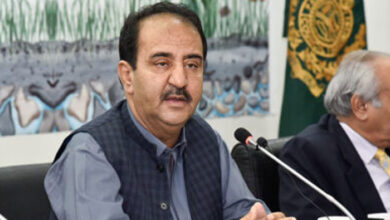
PESHAWAR: Khyber Pakhtunkhwa Chief Minister Sohail Afridi launched a strong criticism of the country’s prevailing political and economic policies, urging the ruling authorities to face the public and be held accountable for their performance.
Addressing the convocation ceremony at the University of Peshawar, Afridi said, “Whoever is advising you is the biggest fool. Come and face the people. Ask them about yourselves and those whom you brought through Form 47. The people will tell you what your real position is.” He added that governments that avoid public scrutiny can never succeed and that rulers must answer to the people for their actions.

Highlighting his government’s education initiatives, Afridi said that public universities in Khyber Pakhtunkhwa have been given top priority. He stated that financial assistance for universities has been increased to Rs12 billion and that all pension liabilities accumulated between 2017 and 2024 have been paid in full. Outstanding dues from 2024 through June 2026 have also been released, while university financial deficits have been reduced from Rs9 billion to Rs4.5 billion through reforms.
The chief minister announced that despite the federal government’s discontinuation of the Ehsaas Scholarship Program, the provincial government would continue the initiative from its own resources. He said that interest-free educational loans for students, a special overseas education loan scheme, and a new provincial internship policy would soon be introduced.
Afridi stressed that young people have historically played a decisive role in every national movement but warned that the growing lack of employment opportunities has contributed to an alarming increase in brain drain. He emphasized the need to provide better educational and economic opportunities to the country’s youth.
Criticizing the federal government’s economic policies, he claimed that increasing fuel prices appeared to be its only solution for improving the economy. He said that Pakistan’s economy was growing at 6.1 percent before the end of former Prime Minister Imran Khan’s government, whereas GDP growth currently stands at around 3 percent. He further alleged that the national debt has increased from Rs43 trillion to Rs76 trillion over the past few years.
Discussing provincial finances, Afridi said the Khyber Pakhtunkhwa government had increased its revenue collection from Rs68 billion to over Rs150 billion without imposing new taxes. He noted that the province exceeded its revenue target of Rs129 billion for the fiscal year 2025–26 by collecting more than Rs150 billion.
He added that Khyber Pakhtunkhwa produces more than 800 million cubic feet of gas per day and, under the Constitution, should receive priority in gas supply. He described the ongoing gas load-shedding in the province as unacceptable.
Commenting on the political situation, Afridi said that issues relating to Kashmir, Balochistan, and other regions should be resolved through political and constitutional means rather than the use of force. He called for an impartial investigation into the events of November 26 and justice for the families of those who lost their lives.
Referring to the country’s political climate, he remarked that despite what he described as continued state oppression, former Prime Minister Imran Khan remains popular and that the people alone will determine Pakistan’s political future. He also alluded to upcoming political mobilization efforts scheduled for August 5, describing them as a “semi-final” ahead of what he termed a subsequent “final” phase.