Pakistani Calligrapher Honoured for Preserving Sacred Calligraphy at Masjid-e-Nabawi
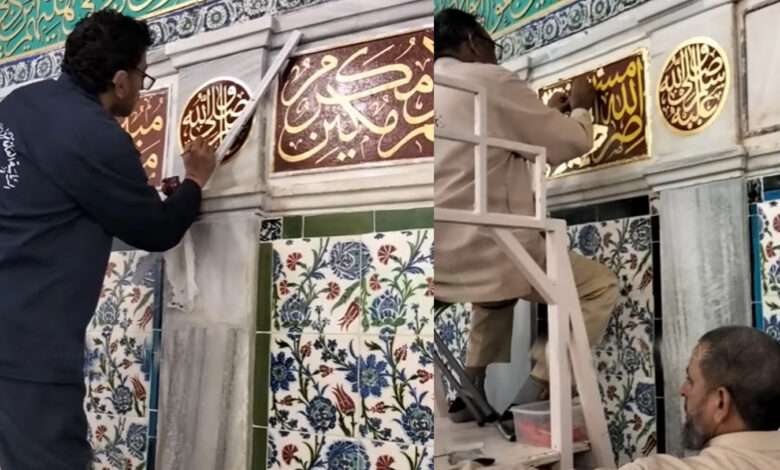
RIYADH: The beautifully calligraphed walls surrounding the Qibla area of Al-Masjid an-Nabawi continue to stand as a remarkable masterpiece of Islamic art, architecture, and devotion.
The intricate calligraphy adorning the sacred walls was originally created during the reign of Ottoman Sultan Abdulmejid I in the 1840s. The artwork features nearly 185 blessed names of the Holy Prophet Muhammad ﷺ.
Most of the inscriptions are written in the elegant Thuluth script, widely regarded as one of the most distinguished and majestic styles in Islamic calligraphy.
The current chief calligrapher of Masjid-e-Nabawi is renowned Pakistani artist Shafiq uz Zaman Khan, who earned international recognition after securing first position in a global competition held in 1994 for the restoration of the mosque’s historic calligraphy.
For more than three decades, Shafiq uz Zaman Khan has been entrusted with the restoration, preservation, and creation of calligraphic artwork on the domes and walls of the Prophet’s Mosque, particularly the centuries-old Ottoman inscriptions.
In recognition of his extraordinary contributions to Islamic art and heritage, the Government of Pakistan awarded him the prestigious Pride of Performance civil award.
The original Ottoman-era calligraphy at Masjid-e-Nabawi was created by celebrated Egyptian Ottoman calligrapher Abdullah Zuhdi Efendi during the reign of Sultan Abdulmejid I.