Trump Plan to Relocate Afghan Allies to Congo Sparks Global Criticism
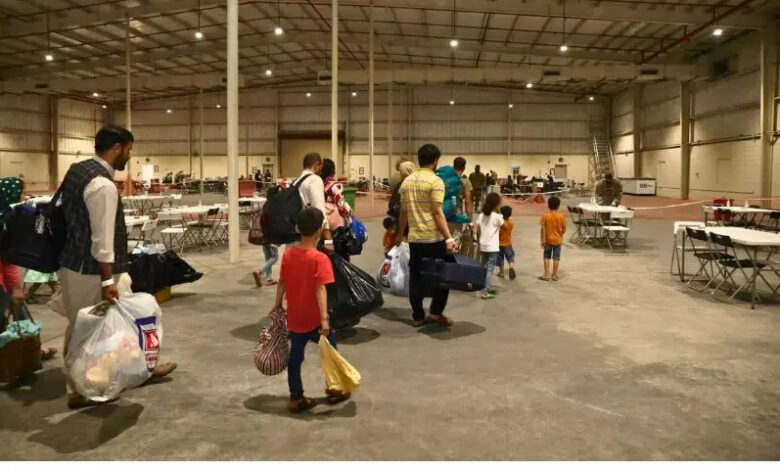
Washington: A controversial proposal linked to former US President Donald Trump to relocate Afghan nationals who assisted American forces during the Afghanistan war to the Democratic Republic of Congo has sparked widespread debate and criticism.
According to a report by The New York Times, around 1,100 Afghan allies—including interpreters who worked with US troops, former Afghan special forces personnel, and family members of US service members—are affected by the plan. Notably, more than 400 children are also part of this group.
These Afghan nationals have been living in uncertainty in Qatar for over a year after being evacuated following the Taliban’s takeover of Afghanistan in 2021, due to security concerns stemming from their cooperation with US forces.
Shaun VanDiver, president of the advocacy group AfghanEvac, told The New York Times that US State Department officials had informed them about the proposal to transfer these individuals to Congo. He said the Afghans are effectively being given two options: return to Taliban-controlled Afghanistan or relocate to Congo, a country facing one of the world’s most severe humanitarian crises.
VanDiver strongly criticized the plan, calling it an attempt to force vulnerable individuals back into life-threatening conditions. “No one would choose to move from one of the world’s worst crisis zones to another,” he said.
He further noted that, according to the United Nations, Congo is already hosting over 600,000 refugees from Rwanda and the Central African Republic, while ongoing conflict has made refugee camps frequent targets of attacks.
Meanwhile, US State Department spokesperson Tommy Pigott criticized the previous administration, claiming it had irresponsibly allowed large numbers of Afghans into the United States, placing strain on resources. He stated that the current approach aims to restore accountability and explore responsible, voluntary resettlement alternatives.
Human rights experts, however, have condemned the proposal, describing it as a betrayal of individuals who risked their lives to support the United States.
Former senior diplomat Rina Amiri questioned the long-term implications, asking who would support the US in future conflicts if it fails to honor commitments to its allies.
Many Afghan refugees currently housed at Camp As Sayliyah in Qatar have rejected the idea of relocation to Congo, arguing that their families are already settled in the United States and questioning why they should be sent to Africa instead.
Andrew Sullivan of the organization No One Left Behind emphasized that individuals who have cleared security checks should be allowed entry into the United States. If relocation to a third country is necessary, he added, it should be a safe destination without ongoing humanitarian crises.