Nawaz Sharif Praises Civil-Military Leadership for ‘Historic Role’ in Regional Peace
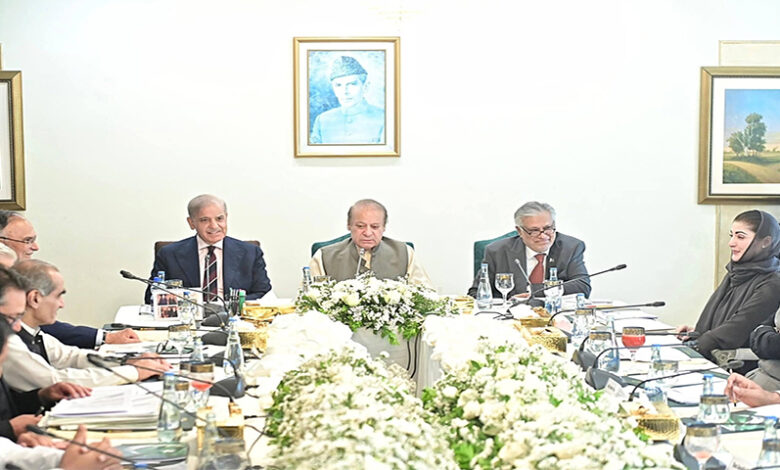
LAHORE: Former prime minister Nawaz Sharif has said that Field Marshal Syed Asim Munir, Prime Minister Shehbaz Sharif, and Foreign Minister Ishaq Dar are playing a historic role in promoting peace in the region.
Addressing a meeting of the parliamentary board of the Pakistan Muslim League (N) for Gilgit-Baltistan, Nawaz Sharif emphasized that politics should not be about luxury, official privileges, or holding office, but rather about genuine public service.
He highlighted development projects undertaken during his tenure, including the Lowari Tunnel, stating that such initiatives were essential despite the relatively small population of certain areas. He urged the federal government to continue supporting Gilgit-Baltistan while also stressing the need for local contribution and transparency in the use of funds.
Nawaz Sharif said that infrastructure projects worth Rs60 billion in Gilgit-Baltistan during the PML-N government helped reduce travel distances and improve connectivity. He added that Prime Minister Shehbaz Sharif is also focusing on the region’s development.
He further claimed that whether in development, politics, or defense, his party has delivered results that are recognized globally. Referring to 1998, he said the respect of Pakistan’s passport had increased and is once again improving under the current leadership.
The former premier advised elected representatives to follow the “Punjab model,” citing development initiatives carried out under Shehbaz Sharif’s leadership as chief minister. He said residents of Gilgit-Baltistan should receive facilities such as free medicines, quality education, and improved transport similar to those in Punjab.
He also pointed to the region’s geographic importance and tourism potential, expressing hope that new projects would attract international visitors and improve local livelihoods.
Criticizing the performance of the government in Khyber Pakhtunkhwa over the past 15 years, Nawaz Sharif questioned whether basic services like healthcare, education, and transport had improved, asking why the public had not seen meaningful progress.
He reaffirmed his commitment to supporting Gilgit-Baltistan, stating that he would act as an “ambassador” to help secure funds from the federal and provincial governments, adding that large-scale road projects would transform the region’s future.