Cervical Spine Issues: How Poor Posture and ‘Tech Neck’ Are Affecting Health in Pakistan
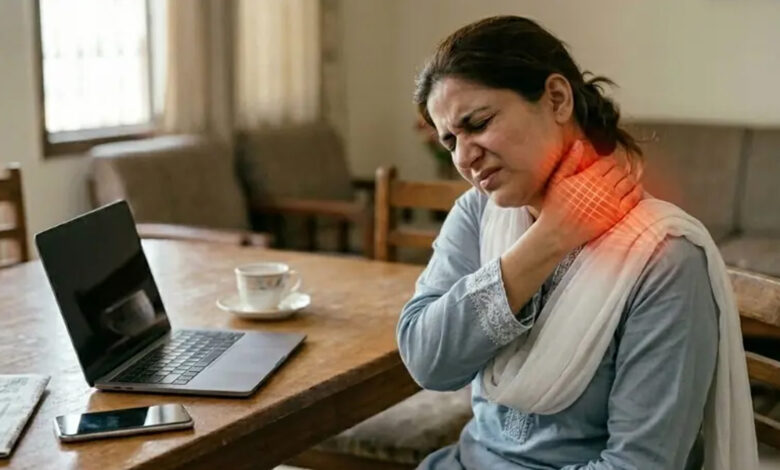
The uppermost part of the spine that supports the neck is known medically as the **cervical spine**. In Pakistan, it is commonly referred to as “cervical pain” or “cervical issues,” which includes any dysfunction of the neck vertebrae, the cushioning discs between them, and the nerves passing through.
Experts identify **modern lifestyle changes**, particularly excessive use of mobile phones and laptops, as the primary cause. Prolonged neck bending to look at screens—often called “tech neck”—places undue pressure on the vertebrae and alters their natural alignment.


Research by **Dr. Kenneth Hansraj**, a renowned rehabilitation medicine specialist and spine surgeon in New York, shows that tilting the neck forward by 60 degrees to look at a phone can place approximately **60 pounds (27 kg)** of pressure on the cervical spine, while the head itself weighs only 10–12 pounds.
Age-related wear and tear also contribute, as the cushioning discs between vertebrae naturally dry out and thin over time, causing stiffness and pain. Other triggers include sleeping on excessively high pillows or lifting heavy weights abruptly, which can compress the spine and cause what is commonly referred to as “vertebral gaps.”
Cervical spine issues are not limited to neck pain. Patients may also experience headaches at the back of the head, dizziness, and numbness in the hands or fingers. Modern medical research indicates that structural problems in the cervical spine can directly impact heart function. Abnormal bony growths on the vertebrae may interfere with the autonomic nervous system that regulates heart rhythm—a condition known as **cervicogenic cardiac arrhythmia**. This can cause sudden drops in heart rate, fainting, and is often mistaken for a primary heart disorder.
Diagnosis using advanced imaging and monitoring has revealed that in some cases, chest pain or irregular heartbeat originates not from the heart valves but from cervical spine abnormalities. This highlights the importance of examining the upper spine when investigating cardiac-like symptoms, to prevent complications stemming from nerve dysfunction.
**Prevention and management** focus on simple lifestyle adjustments:
* Maintain proper posture while sitting or standing. Keep screens at eye level to avoid neck strain.
* Use pillows that support the natural curve of the neck while sleeping.
* Take short breaks from prolonged sitting, and perform light neck exercises to improve blood flow and strengthen muscles.
* If pain worsens, persists, or causes weakness in the arms, consult a licensed physiotherapist or orthopedic specialist promptly.
Early intervention, posture correction, and regular exercise are key to avoiding long-term complications from cervical spine problems.
—
If you want, I can also create a **shorter, punchy version suitable for newspapers or online headlines** that highlights the “tech neck” epidemic in Pakistan in just a few sentences. Do you want me to do that?