Trump Announces 10-Day Pause on U.S. Strikes Against Iranian Energy Facilities Amid Controversy
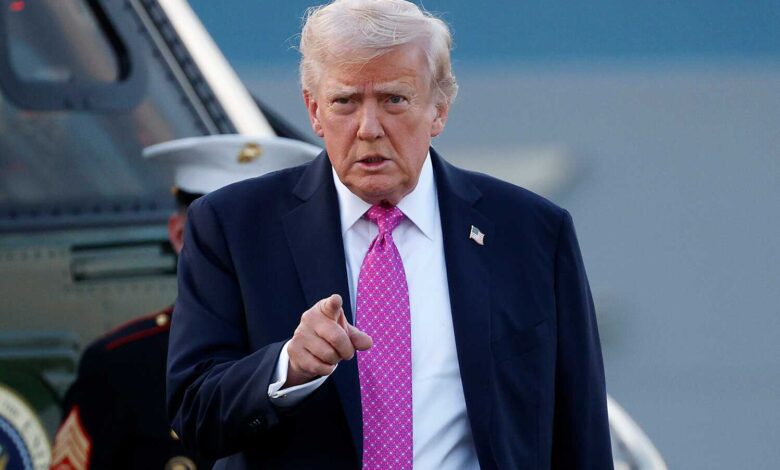
Washington: In a surprising move amid escalating tensions in the Middle East, U.S. President Donald Trump announced a temporary 10-day halt on potential military strikes targeting Iranian energy facilities. The announcement, made via his social media platform ‘Truth Social,’ stated that the delay extends until Monday, April 6, 2026, and was reportedly in response to a special request from the Iranian government.
Trump described ongoing back-channel negotiations with Tehran as “positive and constructive,” revealing in an interview on Fox News’ The Five that Iran initially requested a 7-day pause, but the U.S. administration extended it to 10 days.

However, the report by The Wall Street Journal contradicted this claim, stating that Iran had not formally requested any pause in attacks and had yet to present an official stance on a 15-point peace proposal aimed at ending the conflict.
The temporary halt comes amid sustained U.S. and Israeli military pressure on Iran, particularly to reopen the Strait of Hormuz—a critical maritime route for nearly 20% of global oil supplies, currently blocked due to heightened security risks. The disruption has caused global oil prices to spike and created uncertainty in energy markets.
Defense and diplomatic analysts suggest the 10-day pause could offer a rare window for de-escalation and may signal the early stages of a broader diplomatic strategy. Nonetheless, conflicting statements from U.S. and Iranian officials have added to the complexity of the situation.
Reports also indicate that the White House is reportedly considering extensive ground operation options in the region, raising fears of a renewed escalation. International law experts have warned that deliberate targeting of civilian energy infrastructure could constitute a violation of the Geneva Conventions, with Amnesty International describing the proposed strikes as a “potential war crime threat.” Meanwhile, military analysts argue that dual-use facilities—serving both civilian and military purposes—are increasingly targeted in modern conflicts, complicating interpretations of international law.
The unfolding scenario highlights the fragility of peace in the Middle East and the potential global economic ramifications if tensions intensify further.