Iran Border to Shift to ODR System, Unemployment Not Cause of Terrorism: Hamza Shafqaat

**Quetta:** Additional Chief Secretary (Home) Balochistan Muhammad Hamza Shafqaat has announced that the transit system at the Iran border will be shifted to the Online Declaration and Registration (ODR) system within the next one to two months, adding that cross-border movement will no longer be allowed without passports.
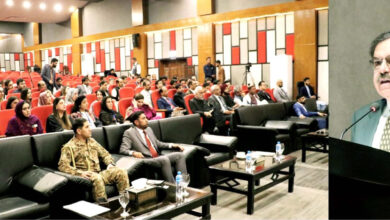
Addressing a meeting of office-bearers and members of the Quetta Chamber of Commerce and Industry, Shafqaat said facilitating individuals engaged in legal trade remains the government’s top priority. He emphasized that smuggling, poppy cultivation, and illegal trade would no longer be tolerated.
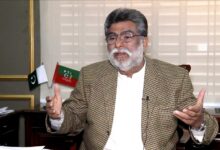
He rejected the perception that unemployment is the primary cause of terrorism in Balochistan. Citing official statistics, he said that although more than 220,000 people in the province are unemployed — with the highest numbers in Zhob, Loralai, Quetta, and Nasirabad divisions — the divisions facing higher incidents of terrorism, such as Makran and Rakhshan, actually have comparatively lower unemployment rates.
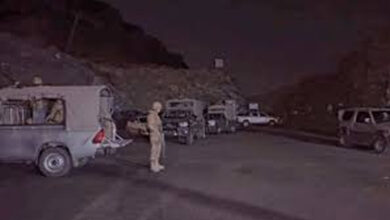
Referring to the January 31 attacks across various districts, Shafqaat said around 400 individuals were involved, of whom 221 had been killed and nearly 100 arrested. He further claimed that the Noshki attack was financed through poppy cultivation and reiterated that illegal border trade and smuggling would not be permitted under any circumstances.
He also announced that residents of bordering districts would soon be provided free passports by the provincial government and financial assistance through the Benazir Income Support Programme. Additionally, children of workers registered with the Workers Welfare Board would receive free education in top national institutions, while individuals seeking employment abroad could receive financial support of up to Rs7 million from the provincial government.
Former Balochistan governor Malik Abdul Wali Kakar, former caretaker minister Yahya Khan Nasir, and Chief Collector Appraisement Balochistan Masood Ahmed also addressed the gathering.
Representatives of the business community highlighted challenges including unfair tax valuation, delays in import and export transportation, and restrictions at border terminals. They demanded a six-month extension in EIF duration, permission for up to 10 percent mutation of re-rollable scrap, extended working hours at the Taftan border, and approval for the movement of all goods through the Bazaarcheh Business Terminal.
Chief Collector Masood Ahmed stated that Pakistan Customs services are available 24/7; however, border closures on the Iranian side create operational hurdles. He said the issue would be raised at the Joint Border Trade Committee (JBTC) and assured traders that steps are being taken to facilitate business and prevent unemployment.