Pakistan Stock Exchange Breaks New Record as KSE-100 Crosses 186,000 Points
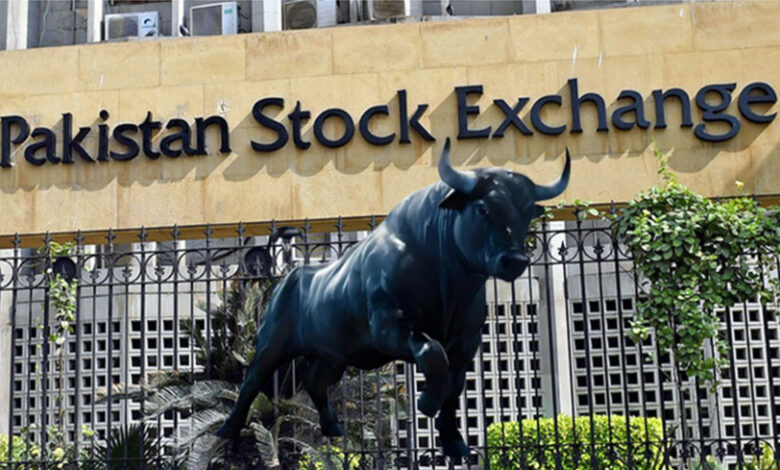
The Pakistan Stock Exchange (PSX) continued its record-breaking rally on Wednesday as the benchmark KSE-100 Index crossed the historic 186,000-point mark for the first time during early trading.
At 10:05 am, the KSE-100 Index was trading at 185,797.62 points, up by 735.52 points or 0.40 percent. Market experts attributed the bullish momentum to growing expectations of a possible interest rate cut in the upcoming Monetary Policy Committee (MPC) meeting scheduled later this month.

Strong buying interest was observed across major sectors, including automobile assemblers, cement, commercial banks, fertilizers, oil and gas exploration, oil marketing companies, power generation, and refineries.
Index-heavy stocks such as Hub Power Company (Hubco), Mari Petroleum, Pakistan Oilfields (POL), Pakistan Petroleum Limited (PPL), Pak-Oman Asset Management, SSGC, Wafi Energy, Habib Bank, Meezan Bank, National Bank of Pakistan, and MCB Bank traded in the green, providing significant support to the index.
On Tuesday, United Bank Limited (UBL) became Pakistan’s largest listed company by market capitalization, reaching Rs1.28 trillion and overtaking Oil and Gas Development Company Limited (OGDCL).
The stock market had closed on a strong note on Tuesday due to heavy institutional buying, with the KSE-100 Index gaining 2,653 points or 1.45 percent to settle at a new all-time high of 185,062 points.
On the global front, Asian markets showed mixed performance. Oil futures in Asia remained subdued, while resource-linked stocks showed improvement. Investors closely monitored the political crisis in Venezuela and its potential impact on global oil supplies.
Oil prices continued to decline after US President Donald Trump stated that Venezuela would supply up to 50 million barrels of oil at market prices. Japan’s stock market weighed on regional sentiment, although commodity-related shares performed better following gains in industrial metal prices.
Japan’s Nikkei Index fell by 0.25 percent, while Australia’s S&P/ASX 200 Index closed 0.3 percent higher. President Trump also confirmed a $2 billion agreement for the export of Venezuelan crude oil to the United States.
Meanwhile, stocks in Tokyo came under pressure after China announced restrictions on exports of dual-use items to Japan, a move seen as a response to recent remarks by the Japanese prime minister regarding Taiwan.
Economic data released during the Asian trading session showed that Australia’s consumer price inflation rose less than expected in November, with a slight easing in core inflation. In Japan, a private-sector survey indicated that growth in the services sector slowed to its weakest pace since May.