We Will Not Compromise on the Freedom and Autonomy of Religious Seminaries; They Are Fortresses of Islam: Maulana Abdul Wasay

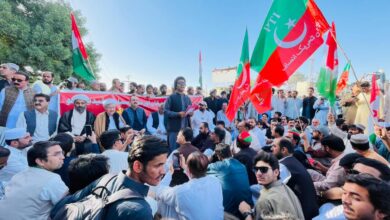
**Quetta:** Ameer of Jamiat Ulema-e-Islam (JUI) Balochistan and Senator, Maulana Abdul Wasay, has declared that no compromise will be made on the sanctity, freedom, and ideological autonomy of religious seminaries, calling them the “fortresses of Islam.” He said that Jamiat Ulema-e-Islam is not merely a political party in this struggle but a comprehensive religious movement committed to defending Islamic identity.
Addressing the annual Dastar-e-Fazilat (Turban-Tying) Conference at Jamia Darul Uloom Islamia Loralai, Maulana Abdul Wasay stated that from the creation of Pakistan to the present day, JUI has remained at the forefront in safeguarding the dignity and independence of religious seminaries, whether in the corridors of power or in the field of action, and considers it a religious duty.
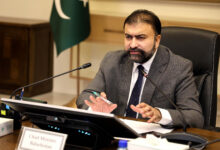

He said that JUI chief Maulana Fazlur Rehman has always prioritized religious seminaries over political expediencies, proximity to power, and short-term interests. Whether it was restrictions in the name of registration, conspiracies to interfere in curricula, or attempts to malign seminaries under various pretexts to please Western powers, Maulana Fazlur Rehman adopted a bold and decisive stance inside and outside parliament to defend these institutions.
Maulana Abdul Wasay emphasized that JUI has made it clear that this struggle is about protecting faith, belief, and Islamic identity. He added that JUI continues to serve as a strong shield for religious seminaries against Western pressure, global agendas, and internal conspiracies.
Highlighting historical context, he said that the struggle of religious seminaries dates back to the time when colonial powers believed they had crushed the freedom movement of the region. After political domination, colonial forces launched cultural, ideological, and educational attacks on Muslim beliefs and civilization. In response, Islamic scholars laid the foundations of independent religious institutions such as Darul Uloom Deoband, Mazahir Uloom Saharanpur, and Madrasa Shahi Moradabad, which later spread across the subcontinent.
He noted that these seminaries were established on the principle of remaining independent of government or semi-government assistance, relying instead on public support. Despite simplicity and limited resources, they rendered unforgettable services to the Muslim Ummah.
Maulana Abdul Wasay said that the teachers and administrators of these institutions were selfless individuals who could have enjoyed worldly comforts and prestige but instead chose hardship to preserve Muslim faith and identity. This educational system, he added, defeated colonial conspiracies and ultimately forced imperial powers to leave the region.
Criticizing Lord Macaulay’s education system, he said it was designed to mentally enslave Muslims, whereas religious seminaries emerged as a strong and invincible parallel system. He stated that when challenges such as extreme rationalism, denial of the finality of Prophethood, and rejection of Hadith arose, religious seminaries stood firmly in defense of Islamic beliefs.
He concluded by saying that preserving the teachings of the Quran and Sunnah, the Arabic language, and Islamic literature, and passing them on from generation to generation while keeping Muslim culture alive despite Western influence, is the distinct contribution of religious seminaries. Jamiat Ulema-e-Islam, he said, considers these institutions the strongest pillar of Islam’s future and will make every sacrifice to protect their freedom, autonomy, and intellectual growth.