Finance Minister Aurangzeb Reaffirms Commitment to Economic Stability During Key Meetings in Washington
Meets IMF, World Bank, U.S. Officials, and Global Investors at Annual IMF–World Bank Sessions
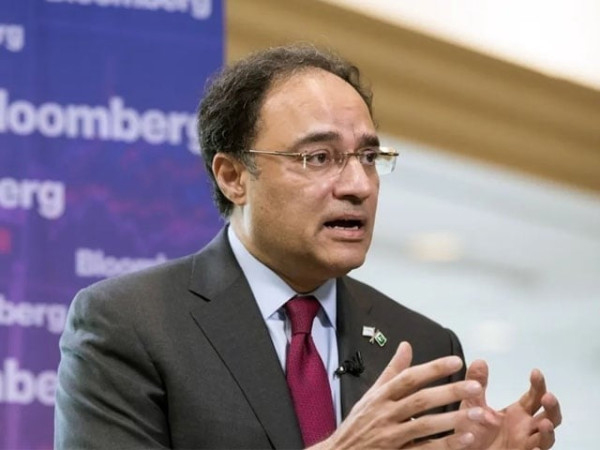
Islamabad: Federal Minister for Finance and Revenue **Senator Muhammad Aurangzeb** continued a series of high-level meetings in **Washington D.C.** during the **IMF and World Bank Annual Meetings**, reaffirming Pakistan’s commitment to maintaining **macroeconomic stability and structural reforms**.
During his meeting with **IMF Deputy Managing Director Nigel Clarke**, Aurangzeb expressed appreciation for the Fund’s support under the **Extended Fund Facility (EFF)** and the **Resilience and Sustainability Trust (RST)**. Clarke commended Pakistan’s performance under the IMF program, while the finance minister reiterated the government’s resolve to continue reform momentum.

The finance minister also met with **World Bank Vice President for MENA, Afghanistan, and Pakistan, Ousmane Dione**, discussing the **Country Partnership Framework (CPF)** and efforts to ensure its effective implementation with full provincial participation. Aurangzeb emphasized Pakistan’s need for improved access to **IDA resources** and proposed a **long-term flood mitigation program** under the new CPF.
In another engagement, Aurangzeb held talks with **Mashreq Bank Group CEO Ahmed Abdelaal** and senior management, lauding the bank’s long-standing partnership with Pakistan. He congratulated Mashreq on its **commercial launch in Pakistan**, expressing optimism that the move would **strengthen Pakistan’s financial system** and foster innovation and investment.
Aurangzeb also met with **senior U.S. government officials**, including **Emory Cox**, Special Assistant to the U.S. President for International Economic Relations; **Ricky Gill**, Senior Director for South and Central Asia; and **Pierre Yared**, Acting Chair of the White House Council of Economic Advisers. Discussions focused on **trade, investment, energy, minerals, technology, and digital assets**. Aurangzeb emphasized turning emerging consensus into a **comprehensive economic partnership** between Pakistan and the United States.
The finance minister thanked the U.S. government for its **sympathy over Pakistan’s recent flood losses** and highlighted opportunities for collaboration in **climate resilience, energy transition, and digital transformation**.
In a meeting with **Sultan Abdulrahman Al-Marshed**, CEO of the **Saudi Fund for Development**, Aurangzeb reaffirmed Pakistan’s commitment to strengthening strategic ties with Saudi Arabia. He appreciated Saudi support in the **oil financing facility** and discussed cooperation in projects like the **Hyderabad–Sukkur Motorway (M-6)**, **Main Line-1 (ML-1)** railway, **skills development**, and **IT infrastructure**.
Addressing the **G-24 Ministers and Governors Meeting**, the finance minister highlighted Pakistan’s progress toward **macroeconomic stability**, underpinned by **tax, energy, and state-owned enterprise reforms**. He also called for **enhanced global cooperation** to tackle **regional trade challenges** and **climate change impacts**.
Aurangzeb later briefed international investors at a **Jefferies International investment roundtable**, outlining Pakistan’s **economic trajectory**, fiscal and monetary policies, export potential, and privatization initiatives. A **Q&A session** followed the presentation.
At the **World Bank’s “Machine Agri Connect: Farms, Firms & Finance for Jobs” dialogue**, the minister underscored agriculture’s **central role in Pakistan’s economy**, advocating for **reduced price controls**, **subsidized loans for farmers**, and **private sector investment** in **cold chains, warehousing, and horticulture value addition**.
Concluding his engagements, Aurangzeb praised the World Bank’s **10-year Country Partnership Framework** for prioritizing **climate resilience and carbon reduction**, endorsing President **Ajay Banga’s call** to draw lessons from successful global models.
> The minister’s series of meetings marked a significant advancement in Pakistan’s **economic diplomacy**, reinforcing partnerships with global financial institutions, investors, and development partners to sustain the country’s **path toward stability and growth**.