Asad Qaiser Claims Current System in Pakistan is “De facto Martial Law,” Urges Constitutional Safeguards

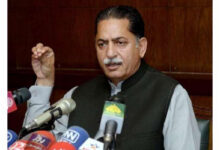
Islamabad: Asad Qaiser, a senior leader of Pakistan Tehreek-e-Insaf (PTI), has stated that the current system in the country is neither constitutional nor legal, and described the situation as “de facto martial law.” Speaking at a press conference organized by the Movement for the Protection of the Constitution, Qaiser criticized the ongoing discussions about the 27th Constitutional Amendment, asserting that legal professionals are mobilizing against it, with plans to use all available platforms inside and outside the Parliament.
Qaiser also responded to rumors about his name being considered for the position of opposition leader, calling them untrue. He expressed hope that Umar Ayub would soon return to his position as the opposition leader in the National Assembly.
Addressing concerns regarding the political system, Qaiser emphasized the need for cases against the founders of PTI to be heard on merit. He criticized the disqualification of opposition leaders in both the Senate and National Assembly, suggesting that it was a politically motivated move. He further questioned the legality of preventing assembly members from visiting jails, asserting that this was a violation of their rights.
Qaiser warned that current decisions were being made under significant administrative pressure, and if cases were judged on merit, there would be little to dispute. He expressed his fears that Pakistan is heading towards severe political instability and anarchy.
Mahmood Achakzai
leader of the Movement for the Protection of the Constitution, Mahmood Achakzai, expressed that the movement would not engage in personal attacks, emphasizing that its purpose was to protect the Constitution. He reflected on the time when he visited jailed political figures, including Nawaz Sharif and Maryam Nawaz, stating that even current parliamentary leaders had visited them in jail. He warned that the country had deteriorated significantly since the times of Zia-ul-Haq and Pervez Musharraf, adding that the public’s anger could lead to the downfall of any authoritarian regime. He called for a movement to ensure the protection of the Constitution and the people’s rights.
Achakzai also proposed a deal with the judiciary and media, demanding that the judiciary be made independent and the media be allowed to operate freely, warning that if such an agreement was not made, they would be forced to take to the streets.
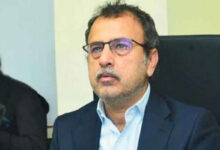
Zbair Umar
Former Sindh Governor, Zubair Umar, provided a bleak analysis of the country’s economic situation, stating that Pakistan had broken all records for economic destruction. He pointed out the alarming inflation rate, which had reached 38%, and highlighted the fact that more than 11.5 million people were living below the poverty line. Unemployment stood at 22%, with youth unemployment rising to 30%, a historical high.
Umar criticized the increase in national debt, which rose by 38 trillion rupees in just three years, compared to 19 trillion during PTI’s tenure. He questioned where the borrowed funds had been spent. Additionally, he pointed out contradictions in the statements of political leaders regarding IMF loans, noting that while they had condemned such loans, they later congratulated each other when the country received them.
He also discussed the dismal state of the country’s foreign investment, which had dropped to its lowest point in 50 years, and criticized the claims made during the launch of the Special Investment Facilitation Council (SIFC) about attracting \$100 billion in foreign investments.
Umar concluded by highlighting the alarming statistics: 2.7 million children out of school, 40% of children suffering from stunted growth, and public-sector enterprises losing one trillion rupees. He warned that a default was imminent, questioning why no action had been taken when the country’s foreign reserves dropped from \$17 billion to just \$4 billion, posing the risk of a financial collapse.