U.S. Imposes 19% Tariff on Pakistan, Offering More Favorable Treatment Compared to India
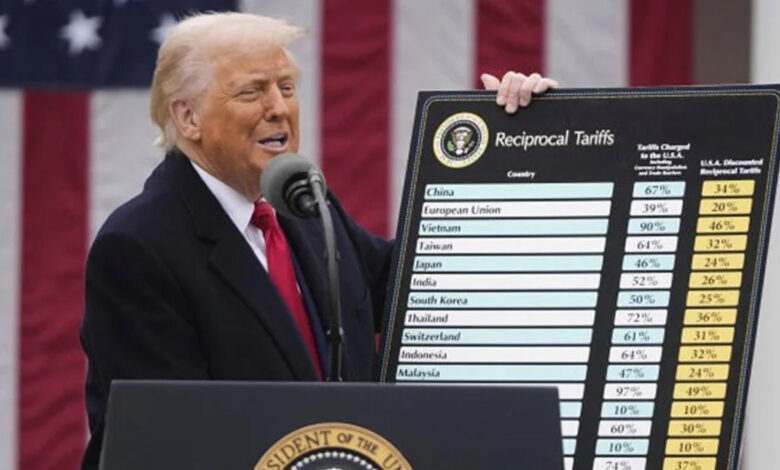
Washington D.C:In a move that appears to offer Pakistan preferential treatment, the **Trump administration** has imposed a **19% retaliatory tariff** on Pakistani products, while **India** faces a higher **25% tariff**. This makes Pakistan one of the countries in **South Asia** to receive the most lenient tariff treatment compared to its regional counterparts.
According to a statement from the **White House**, Pakistan’s tariff is lower than many other nations, including **South Africa** (30%), **Switzerland** (39%), and **Turkey** (15%). Even **Israel**, a close U.S. ally in the **Middle East**, faces a **15% tariff**.
Additionally, the **U.S.** has increased tariffs on **Canada** from **25% to 35%** due to policy disagreements between the two countries.
**Countries Affected by New Tariffs:**
* **10% Tariff**: United Kingdom, Brazil, Falkland Islands.
* **15% Tariff**: Turkey, Israel, Afghanistan, Angola, Bolivia, Botswana, Cameroon, Chad, Costa Rica, Ivory Coast, Congo, Ecuador, Guinea, Fiji, Ghana, Guyana, Iceland, Japan, Jordan, Lesotho, Madagascar, Malawi, Mauritius, Mozambique, Namibia, Norway, New Zealand, Nigeria, North Macedonia, Norway, Papua New Guinea, South Korea, Trinidad and Tobago, Uganda, Vanuatu, Venezuela, Zambia, Zimbabwe.
* **18% Tariff**: Nicaragua.
* **19% Tariff**: Indonesia, Malaysia, Philippines, Thailand, Cambodia, and **Pakistan**.
* **20% Tariff**: Sri Lanka, Vietnam, Taiwan, and Bangladesh.
* **25% Tariff**: Kazakhstan, Tunisia, Moldova, and India.
* **30% Tariff**: Algeria, Libya, Bosnia-Herzegovina, and South Africa.
* **40% Tariff**: Myanmar and Laos.
* **41% Tariff**: Syria (highest tariff imposed).
This tariff structure has been seen by **analysts** as a sign of Pakistan’s **effective foreign policy**, particularly in the context of **high-level diplomatic interactions**. The **meeting between General Syed Asim Munir, the Chief of Army Staff** of Pakistan, and **U.S. President Donald Trump**, along with the engagements of **Prime Minister Shehbaz Sharif**, **U.S. Secretary of State Marco Rubio**, **Deputy Prime Minister Ishaq Dar**, and **Minister of Finance Mohammad Aurangzeb** with U.S. officials, seem to have played a significant role in securing this preferential treatment.
Experts suggest that **Pakistan** should now seize this opportunity to **leverage** the situation effectively to further its **economic interests** on the global stage.