Pakistan Rejects Indian Hegemony, Urges Afghanistan to Deny Space to Indian Proxies: COAS General Asim Munir
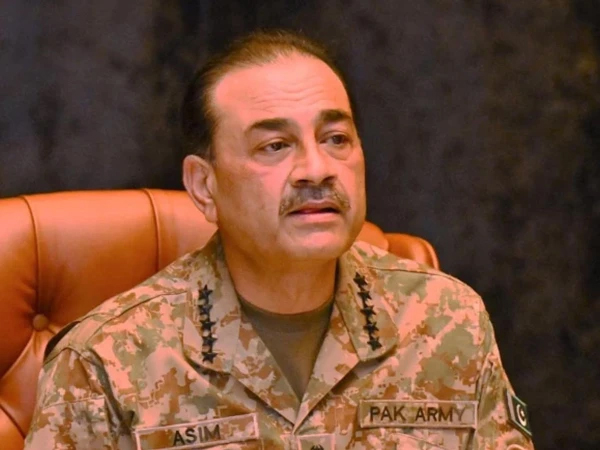
ISLAMABAD – Pakistan’s Chief of Army Staff, Field Marshal General Syed Asim Munir, delivered a strong message to India, stating that Pakistan has never accepted Indian hegemony and never will. He emphasized the importance of regional sovereignty and urged Afghanistan to deny space to India-backed terrorist proxies such as Fitna-tul-Hind and Fitna-tul-Khawarij.
Addressing officers at the 52nd Common Training Program, the Army Chief highlighted the significance of unity among the people, the government, and the armed forces for Pakistan’s progress. He underscored the critical role played by the civil bureaucracy in fostering harmony among all state institutions, adding that this responsibility now rests heavily on the shoulders of the new officers.
Field Marshal Munir recalled Pakistan’s resolute response to unprovoked Indian aggression, from the Line of Control in Kashmir to the country’s southern coasts, calling it a moral and strategic victory. “Pakistan responded strongly and justly in the battle of truth (Ma’rakah Haq), and Allah supported us because our cause was just,” he said.
He reaffirmed that the Pakistan Armed Forces are fully prepared to meet modern warfare challenges and remain vigilant at all times. “Our message to India is clear: Pakistan never accepted Indian dominance in the past and will never accept it in the future,” he reiterated.
Blaming India for regional instability, the Army Chief declared that terrorism within India is largely a product of its own internal oppression—especially against minorities, including Muslims. “India is the biggest patron of terrorism in the region,” he said, adding that the Pakistani nation will never bow before Indian pressure.
Regarding Afghanistan, Field Marshal Munir referred to the country as a brotherly Islamic neighbor, expressing Pakistan’s desire for good relations. However, he stressed that Afghanistan must not allow its soil to be used by India-backed terrorist groups.
He urged the civil officers to rise above ethnic and regional identities, embracing a unified Pakistani identity. “Every system has flaws, but your duty is to ensure that weaknesses and negative forces do not overpower the system,” he said.
He further encouraged the officers to learn from Pakistan’s history and pass on the national narrative to future generations. “Love and loyalty to the country are the foundation. Develop courage, capability, and character — and if you must choose one, always prioritize character,” he concluded.