Bangladesh’s Interim Leader Muhammad Yunus Declares No Intent to Remain in Power After 2026 Elections

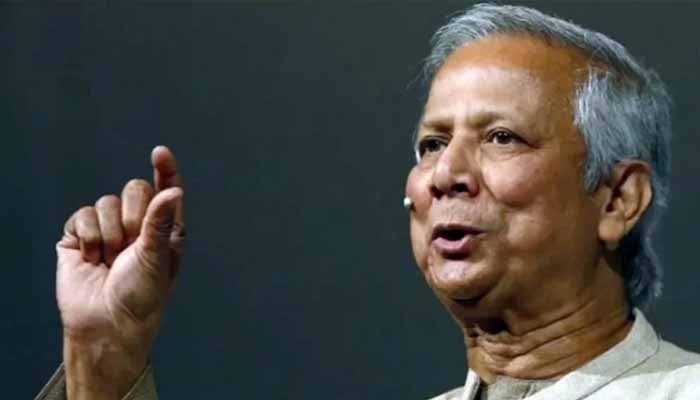
Nobel Peace Laureate and interim leader of Bangladesh, Muhammad Yunus,** has stated unequivocally that he has **no intention of remaining in power** after the country’s upcoming general elections, scheduled for **April 2026**. Speaking at a foreign policy forum hosted by **Chatham House in London**, the 84-year-old emphasized his role is purely transitional — aimed at guiding Bangladesh toward democratic stability.
> “Absolutely not — I do not wish to remain in power,” Yunus said firmly, waving his hand to underscore his commitment. He added that all members of the **interim cabinet share the same belief**.


Yunus took charge following a **student-led uprising in August 2024** that brought down **Sheikh Hasina’s 15-year rule**, plunging the country into political turmoil. The **2026 elections** will mark the **first democratic mandate** since the uprising.
During his address, Yunus revealed that his government plans to unveil a **“July Charter”** — a comprehensive **reform package** focused on **restoring democratic institutions** that were weakened under Hasina’s tenure. He said the reforms are being crafted by a **Consensus Commission**, engaging with various political parties to ensure broad-based legitimacy.
Although Yunus acknowledged that **more time is needed** for deep structural reforms, political pressure from key stakeholders has pushed the interim government to set an election timeline for April 2026.
> “Our duty is to complete the transition responsibly,” Yunus said. “When power is handed over, the people should feel confident. If elections lack credibility, the crisis will persist.”
In related developments, Yunus is reportedly scheduled to meet with **Tarique Rahman**, acting chairman of the **Bangladesh Nationalist Party (BNP)**, in London. Rahman, 59, son of former PM **Khaleda Zia**, is seen as a strong contender in the upcoming elections.
Living in **exile in London since 2008**, Rahman was convicted under Sheikh Hasina’s government, though those convictions have since been overturned. He is now preparing to **return to Bangladesh** and **resume leadership** of the BNP in the lead-up to the polls.
This transitional period marks a **pivotal moment in Bangladesh’s political landscape**, with hopes riding high on a peaceful return to democratic order.