Eid-ul-Adha: A Spiritual Festival That Boosts Pakistan’s Economy by Hundreds of Billions
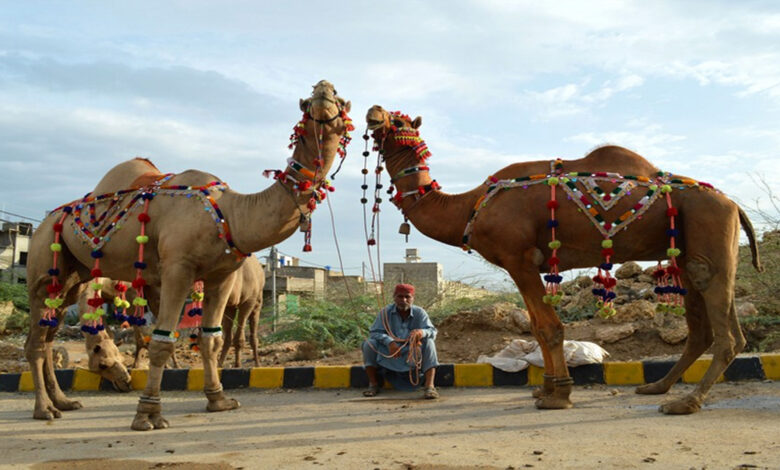
Lahore:While **Eid-ul-Adha** is one of the most significant religious festivals for Muslims worldwide, in Pakistan, it also serves as a powerful **economic engine**, creating temporary jobs, stimulating rural economies, and supporting key industries.
According to **economic expert Raja Kamran**, Eid-ul-Adha has evolved into a **massive economic activity**. Every year, millions of livestock are bought and sold, with **special cattle markets** set up not just in major cities but now in almost every urban locality. This expansion has significantly increased the economic scale of the festival.

One of the unique features of Eid’s economic cycle is the **reverse cash flow** — from **urban to rural areas** — as opposed to the usual rural-to-urban flow. As urban consumers purchase sacrificial animals, billions of rupees are injected into rural communities, supporting **farmers, herders, and transporters**.
Temporary employment also surges during this time. Thousands of people find **short-term work** as butchers, helpers, and sanitation workers. The **demand for knives, cleavers, packaging materials, and transportation** also spikes.
A significant economic impact comes from the **leather industry**, which receives a **large portion of its raw material**—animal hides—from Eid sacrifices. According to industry data, around **Rs. 5 billion worth of hides** are collected each year. A large share is exported, while the remainder fuels local manufacturing of **shoes, jackets, bags, car seat covers**, and other leather goods.
After struggling with low demand due to cheap leather imports, **Pakistan’s leather industry is now recovering**, with a **rising global demand** for genuine leather.
According to the **Economic Survey of Pakistan**, the **agriculture sector** contributes **18.5%** to the national GDP, of which **60.5%** comes from **livestock**. Around **38.5% of the workforce** is engaged in agriculture. The **livestock sector’s total value** reached **Rs. 1,440 billion in FY 2018-19**, up from **Rs. 1,384 billion** in the previous year.
**Dr. Anwar Shah**, a professor at the **School of Finance and Economics, Quaid-e-Azam University**, noted a sharp **increase in remittances** from overseas Pakistanis during Eid-ul-Adha. Expats from the US, Europe, the Middle East, and other regions send money home specifically for **sacrificial purposes**.
These funds not only support **relatives** but are also donated to **charitable organizations** that distribute sacrificial meat among the underprivileged.
Dr. Shah emphasized that even if **one person per household** performs Qurbani, it gives a good estimate of the total number of sacrifices and their economic impact. In **2024**, around **6.8 million animals** were sacrificed. With stable economic conditions, that number is expected to either **remain steady or increase in 2025**.
He added that historical data shows **Rs. 200 to 300 billion** is transferred from cities to rural areas during Eid-ul-Adha each year — making it not just a **religious event**, but also a **powerful driver of Pakistan’s informal economy**.