Judicial Approval Mandatory at Four Stages of Judges’ Transfers, Supreme Court Observes
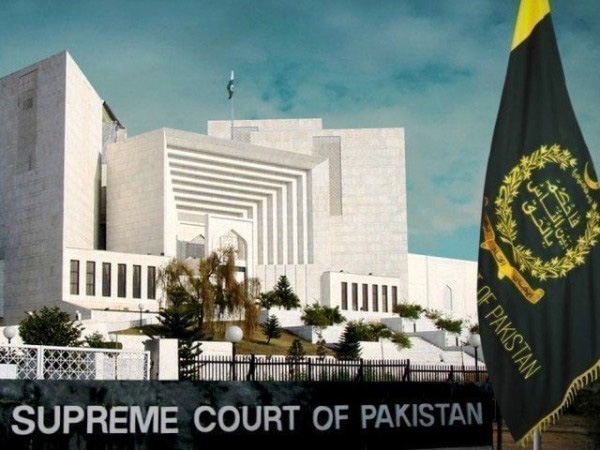
Islamabad: The Supreme Court of Pakistan, during the hearing of a significant constitutional case regarding the transfer of judges, stated that judicial approval is mandatory at four distinct stages for any such transfer to be considered valid.
A five-member constitutional bench, headed by Justice Muhammad Ali Mazhar, heard the case. Advocate Faisal Siddiqi presented his arguments, while Attorney General Mansoor Usman Awan is scheduled to continue his submissions tomorrow.
During the proceedings, Advocate Faisal Siddiqi argued that the Islamabad High Court was established under Article 175 of the Constitution, which pertains to provincial judges’ appointments. According to him, transfers to the Islamabad High Court are not constitutionally viable, and even if such a transfer occurs, it is not permanent and does not require the judge to retake the oath upon return.
Justice Muhammad Ali Mazhar questioned whether Article 200 had become ineffective after the enforcement of Article 175-A. Siddiqi responded that the current transfer mechanism undermines the authority of the Judicial Commission, contrary to the constitutional spirit.
Justice Shakeel Ahmed suggested that a unified seniority list for judges across the country could resolve many disputes. Siddiqi agreed, stating that such a list would make the implications of transfers more transparent. He also criticized the executive’s interference in seniority matters, calling it an overreach.
Justice Mazhar explained the four-stage process of judge transfers: consent from the chief justice of the transferring high court, the chief justice of the receiving high court, the judge being transferred, and finally, the Chief Justice of Pakistan. He emphasized that if any of these four components object, the transfer cannot proceed.
Advocate Siddiqi further alleged that the current system has manipulated the sensitive issue of judicial seniority, keeping the judiciary in the dark.
Attorney General Mansoor Usman Awan, in his arguments, stated that under Article 200, judges’ transfers can be either temporary or permanent. Temporary transfers include allowances, while permanent ones come with official housing. He clarified that temporarily transferred judges return to their original high courts, and no new oath is required since it’s not a new appointment.
Justice Naeem Afghan questioned whether judges take a new oath under Article 200. The Attorney General responded that the Constitution’s Third Schedule does not mandate a separate oath for Islamabad High Court judges, and all high court judges across Pakistan take the same oath.
Justice Shakeel Ahmed questioned why the final summary from the Law Secretary included clarifications on seniority and the oath requirement. He asked whether the Law Secretary had the authority to determine such matters and whether the Chief Justices were kept in the dark. These issues formed the basis of the petitioners’ claims of mala fide intent.
The hearing was adjourned until tomorrow, with the Attorney General expected to conclude his arguments.