Trump Administration Blocks Harvard University from Admitting Foreign Students Amid Investigation
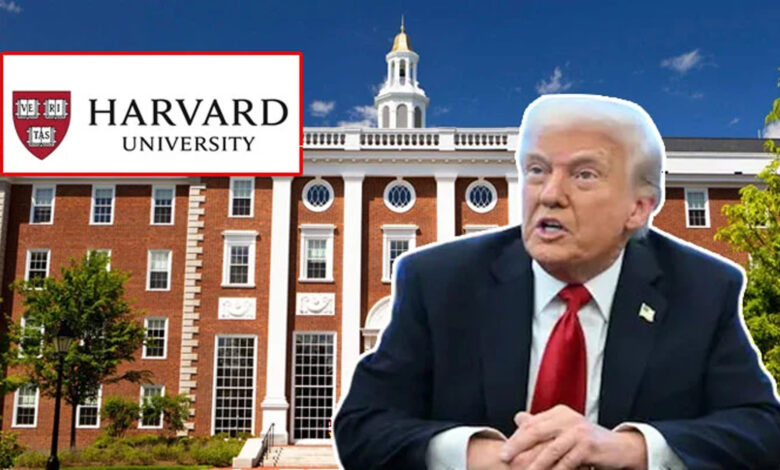
Washington, D.C:In a dramatic escalation of tensions between the U.S. government and one of its most prestigious academic institutions, President Donald Trump’s administration has **revoked Harvard University’s authority to admit foreign students**, citing an ongoing investigation.
According to international media reports, U.S. Secretary of Homeland Security Kristi Noem informed the university of the decision through an official letter, stating that the action was taken to facilitate a **Department of Homeland Security (DHS) probe** into the university.
As per DHS, **Harvard’s certification for the Student and Exchange Visitor Program (SEVP) has been terminated**, which legally bars the institution from enrolling new international students. Additionally, current foreign students enrolled at Harvard will need to **transfer to other institutions**.
### Harvard Responds Strongly
Harvard University has **condemned the decision as “unlawful”** and warned of **serious consequences** not just for the university, but for the **entire U.S. education system**. A university spokesperson stated:
> “This move undermines academic freedom, damages America’s reputation, and disrupts the lives of countless students who came here seeking opportunity and knowledge.”
### Background of Tensions
This is not the first clash between Trump’s administration and Harvard. Earlier, the administration **withheld billions in funding**, and in March, announced a **review of \$256 million in federal contracts and \$8.7 billion in grant commitments** to the university. The justification was Harvard’s alleged failure to **curb antisemitism on campus**, despite growing pressure from the government.
Tensions further escalated when Harvard **refused to comply with federal demands** to align its campus policies with those of other universities that had made changes under administrative pressure.
This latest move signals a **widening rift between academic institutions and the federal government**, and has sparked concern across the global academic community about the **future of international education in the U.S.**