Tim Freddi’s Dangerous Journey Could Lead to Universal Antivenom for Snake Bites
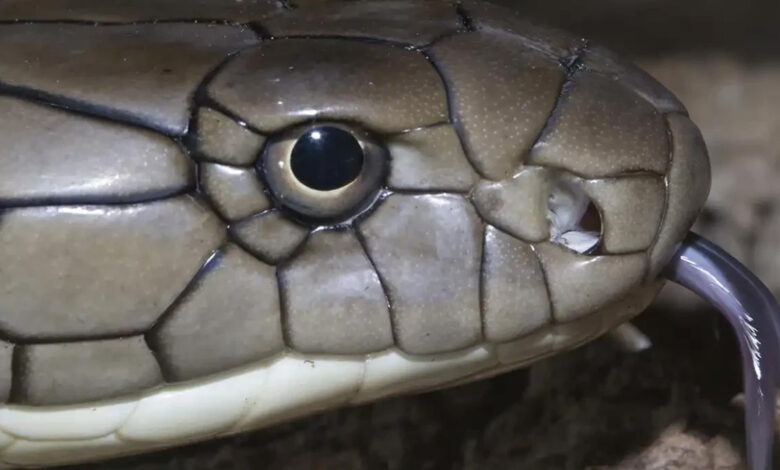
Global Research on Snake Venom** – Snake venom claims thousands of human lives each year, with the World Health Organization estimating that 1.4 lakh people die annually due to snake bites. While far more people suffer permanent disability or physical harm, developing an effective, affordable, and globally applicable antivenom has been a major challenge. However, a former truck mechanic from the United States, Tim Freddi, has taken an extreme approach to find a solution, risking his own life in the process.
**Tim Freddi’s Experimentation with Snake Venom:**
Over the past two decades, Freddi has deliberately exposed himself to snake venom more than 700 times and been bitten by snakes over 200 times. His goal was to stimulate his body to produce antibodies capable of creating natural immunity to venom. Initially sharing his experiments on YouTube, Freddi injected himself with the venom of some of the most dangerous snakes, including cobras, mambas, and kraits, directly into his bloodstream. During one of these instances, after being bitten by two different cobras, he fell into a coma. It was at that moment that Freddi realized his body might have developed a unique defense mechanism that could potentially benefit humanity.


**The Scientific Collaboration:**
As Freddi’s experiments gained attention, Dr. Jacob Glanville, the CEO of the biotech company Sentivax and a prominent immunologist, began observing his work. Dr. Glanville believed that Freddi might possess naturally developed immunity to a wide range of venoms, which could be the key to creating a universal antivenom.
After contacting Freddi, Dr. Glanville and his team extracted blood samples to isolate the antibodies present in Freddi’s immune system, which were then analyzed for their potential to combat venom. Remarkably, no further venom exposure was required; Freddi’s own antibodies were sufficient for the research.
**Breakthrough in Antivenom Development:**
The researchers discovered that the antibodies from Freddi’s blood were highly effective against neurotoxins, toxic substances that affect the nervous system. These are commonly found in the venom of ‘elapid’ snakes such as cobras, kraits, mambas, taipans, and coral snakes. The research team then tested these antibodies on rats exposed to venom from 19 of the world’s deadliest elapid snakes. Astonishingly, the “cocktail” of antibodies was found to be fully effective against 13 types of venom, with partial effectiveness against the remaining six.
**Challenges Ahead:**
While this breakthrough is promising, scientists caution that more work remains. A truly universal antivenom must address not only neurotoxins but also other toxins like *hemotoxins* and *cytotoxins*, which affect blood and cells, found in venom from a large number of snakes, particularly those of the *viper* family.
Professor Peter Kowng from Columbia University has expressed optimism, stating that it is possible that in the next 10 to 15 years, a complete universal antivenom could be developed.
**A Personal Sacrifice for Humanity:**
Tim Freddi, driven by a sense of duty toward humanity, shared his motivation for these dangerous experiments. As quoted in the BBC report, Freddi stated, “I didn’t want to die, nor did I want to lose a finger or part of my body. But I am doing all of this for those who don’t get the antivenom in time.”
Despite this progress, Professor Nick Casewell from the Liverpool School of Tropical Medicine emphasized that large-scale human trials and further research are essential to determine the full effectiveness of this approach.
The research represents a significant leap toward a potential global solution to the problem of snake venom, which continues to pose a deadly threat in many parts of the world.