Structural Reforms Could Make This Pakistan’s Last IMF Program: Finance Minister Muhammad Aurangzeb
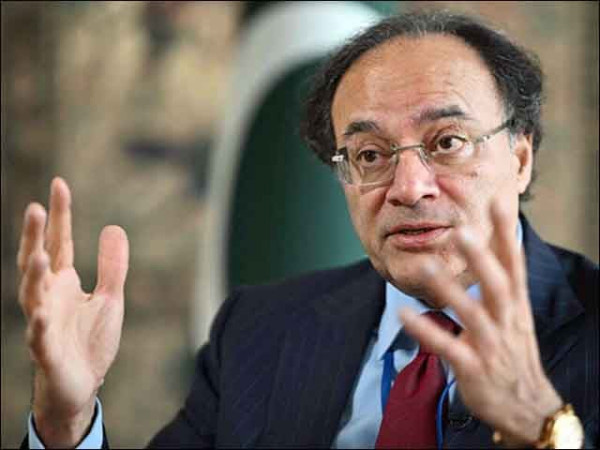
Islamabad: Federal Finance Minister Muhammad Aurangzeb has stated that if structural reforms are fully implemented, the current arrangement with the International Monetary Fund (IMF) could be Pakistan’s last. Speaking to the business community at the Federation of Pakistan Chambers of Commerce & Industry (FPCCI) in Karachi, the minister highlighted both recent economic improvements and the government’s reform agenda.
Aurangzeb, who recently returned from the United States after over 70 meetings with multilateral partners, global financial institutions, and representatives from allied nations such as China, the UK, Saudi Arabia, and the UAE, emphasized the country’s path toward economic stability. “There has been a significant improvement in foreign exchange stability and the current account is expected to remain in surplus for the full year,” he said.
The finance minister acknowledged that Pakistan’s economy had faced fluctuations over the past 8 to 9 years, leading to the country’s involvement in its 28th IMF program. He attributed this to an overreliance on imports and consumption-driven growth, resulting in pressure on foreign exchange reserves and repeated borrowing.
“Prime Minister and the entire leadership are committed to making this IMF program our last,” he added.
Aurangzeb outlined key initiatives being taken to broaden the tax base, including digitization, minimizing human intervention, and building a system based on data and transparency. He said the government is working to increase the tax-to-GDP ratio from the current 10.6% to 13%, and stressed that every sector of the economy must contribute to taxes. Special focus is also being placed on simplifying tax filing for salaried individuals.
On privatization, he confirmed that the process for Pakistan International Airlines (PIA) has restarted and that 24 state-owned enterprises will be transitioned to the private sector. Efforts are also underway to reduce the size of government, with some ministries being merged or eliminated altogether.
Aurangzeb emphasized Pakistan’s focus on increasing exports, particularly in textiles, minerals, information technology (IT), and pharmaceuticals. He revealed that the country has begun exporting automobiles and dairy products and noted that a shipment of vehicles was sent to Saudi Arabia just today. He also mentioned that IT exports had already reached $3.2 billion this year, with a target of $8–10 billion.
The minister also discussed the Reko Diq mining project, which has now reached financial closure. Highlighting the importance of copper in the global energy transition, he said Pakistan is well-positioned to meet international demand.
Aurangzeb concluded by assuring the business community that their input in budget planning is valued and emphasized the importance of moving beyond sector-specific protection toward a more competitive and broad-based economic policy. He reaffirmed the government’s commitment to fiscal discipline and reducing public sector borrowing to allow more space for private investment.