Pakistan Warns India of Ending Key Treaties if Indus Waters Pact Is Terminated
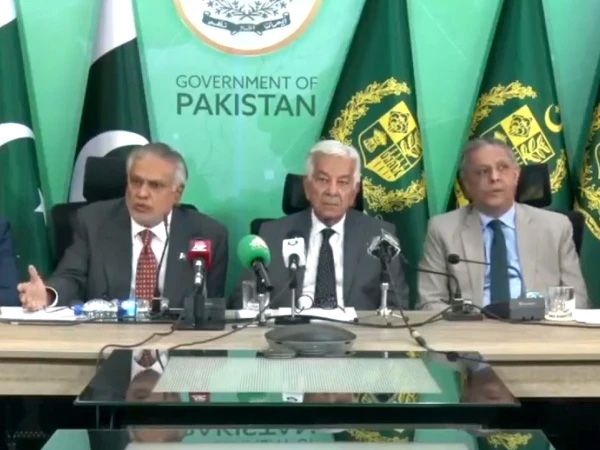
Islamabad: Deputy Prime Minister Ishaq Dar has stated that if India unilaterally terminates the Indus Waters Treaty, Pakistan reserves the right to terminate other bilateral agreements, including the Shimla Agreement. Dar made these remarks during a joint press conference with Defense Minister Khawaja Asif, Information Minister Atta Tarar, Law Minister Azam Nazeer Tarar, and others.
Dar revealed that the National Security Committee (NSC) held a meeting earlier in the day, attended by both military and civilian leadership, to address India’s recent aggressive actions. The meeting resulted in several key decisions, including a firm stance on the Indus Waters Treaty. Dar emphasized that India could not unilaterally end the treaty, and if it attempts to do so, Pakistan would consider ending the Shimla Agreement and other accords.
“We have responded to India’s actions with even greater measures, including the closure of our airspace to Indian flights,” Dar said. He also highlighted the suspension of Indian Airlines’ use of Pakistani airspace, which would lead to significant economic losses for India.
Pakistan has also taken further steps by reducing the Indian High Commission’s staff from 55 to 30, effective April 30. In addition, defense, naval, and air advisors from India in Islamabad have been declared “undesirable” and ordered to leave the country.
Khawaja Asif, the defense minister, commented on the ongoing situation in occupied Kashmir, noting that despite the presence of Indian forces, the recent attack in Pahalgam has raised questions about the involvement of Indian military personnel. Asif further criticized Indian Prime Minister Narendra Modi, calling him a “certified terrorist” for his role in the 2002 Gujarat riots.
Ishaq Dar also referred to a past statement from former U.S. President Bill Clinton, which mentioned Indian involvement in terrorism, further solidifying Pakistan’s position on the matter.
The minister reiterated that the Indus Waters Treaty remains intact despite the growing tensions. A member of the Indus Waters Treaty Commission clarified that the agreement cannot be suspended unilaterally, and if India does seek to terminate it, both nations must convene to renegotiate. Currently, India’s statements are seen as nothing more than provocative rhetoric.
Information Minister Atta Tarar dismissed India’s claims as childish and legally invalid, emphasizing that Pakistan’s actions, not words, have shown its resolve. He also referenced the case of Indian spy Kulbhushan Jadhav as a clear example of India’s support for terrorism, asserting that Pakistan had already “settled the score” on that front.
In conclusion, Pakistan’s leadership has made it clear that any hostile actions from India will be met with strong and reciprocal responses, including the potential termination of long-standing bilateral agreements.