Li-Fi: The Future of Internet Connectivity or Just Another Experiment?
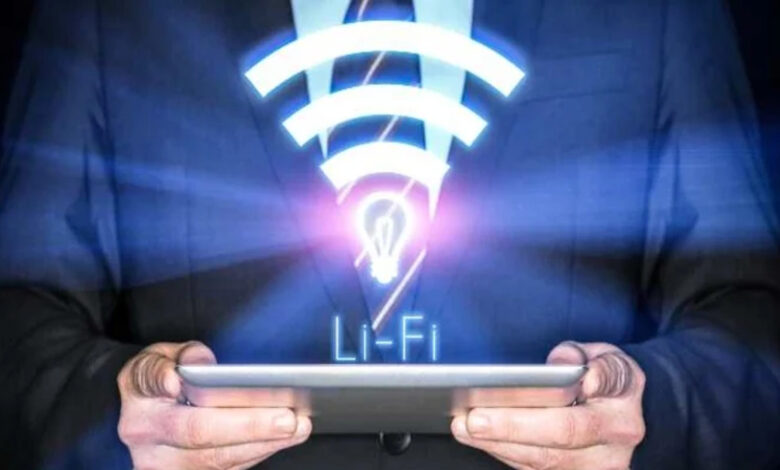
Wi-Fi has been the go-to technology for wireless internet for years, but researchers have been working on alternatives, one of which is Light Fidelity (Li-Fi). While still in its experimental phase, Li-Fi shows immense potential, but the question remains: can it truly replace Wi-Fi? Here’s an in-depth look at this innovative technology, its features, and limitations.
**What is Li-Fi?**


Unlike Wi-Fi, which uses radio signals for internet connectivity, Li-Fi leverages light to transmit data. Yes, this means that light sources, such as LED bulbs, are used to power and connect you to the internet. Because of this, Li-Fi could be up to 100 times faster than Wi-Fi.
Research into Li-Fi began in the 2000s when Harald Haas from Germany discovered that light could be used for two-way data transmission. This discovery led to further experimentation by French company Oledcomm in 2008.
**How Does Li-Fi Work?**
Li-Fi operates through a system known as Visible Light Communication (VLC). It uses LED lights to transfer data, offering speeds far superior to traditional Wi-Fi, which operates via radio waves. What’s fascinating is that this process happens too quickly for the human eye to detect.
**What Does This Mean for Internet Connectivity?**
Wi-Fi first emerged in 1996, and in recent years, standards like Wi-Fi 6, 6E, and the upcoming Wi-Fi 7 have been introduced. While Li-Fi can offer higher speeds than Wi-Fi, speed isn’t the only factor when it comes to wireless connections. According to the Li-Fi group, security is also greatly enhanced with this technology.
Li-Fi signals are confined to the area where the light bulb is shining, meaning it doesn’t pass through walls, making unauthorized access nearly impossible. In theory, Li-Fi can reach speeds of 224,000 megabits per second, which would be ideal for applications like virtual reality, 4K streaming, and online gaming. Furthermore, its low latency makes it a strong competitor against Wi-Fi.
Since Li-Fi doesn’t rely on radio frequencies like Wi-Fi, your connection is immune to electromagnetic interference, which is a common issue with other wireless technologies.
**Li-Fi Technology: Advantages and Disadvantages**
While Li-Fi isn’t perfect, it has several notable benefits and some limitations.
**Advantages:**
– **Speed:** Data transmission via light is much faster than Wi-Fi’s radio signals.
– **Energy Efficiency:** Li-Fi consumes less energy since it utilizes LED bulbs, which are more energy-efficient than traditional lighting.
– **Security:** The confined nature of Li-Fi signals means it offers enhanced security, with reduced risk of external access.
– **Accessibility:** Since light is ubiquitous, the potential to connect to the internet anywhere is high.
**Disadvantages:**
– **Limited Range:** Li-Fi’s connectivity is confined to specific locations as it depends on light. This can make it difficult to use in large spaces or offices.
– **New Technology:** Being a new technology, the number of devices that currently support Li-Fi is limited.
– **Dependence on Light:** Since Li-Fi relies on light, it won’t function if there’s no power or if the bulb is damaged.
**When Will Li-Fi Be Available?**
Currently, Li-Fi technology is still in the research phase, and it could take some time before it’s fully commercialized. Oledcomm, a leading company in Li-Fi development, predicts that commercial availability could happen anytime between 2024 and 2029.
As we continue to advance in the realm of connectivity, Li-Fi offers an exciting glimpse into the future. However, it still has several hurdles to overcome before it can replace or complement Wi-Fi in everyday use.