Peshawar High Court Rejects CM Sohail Afridi’s Petition Against ECP Notice
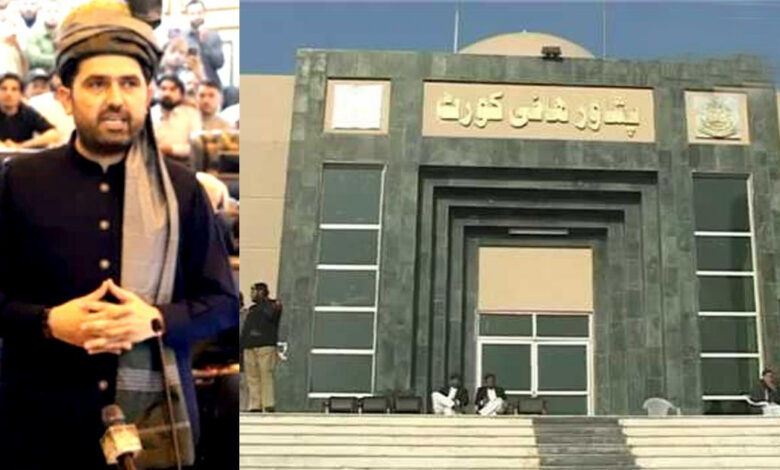
PESHAWAR: The Peshawar High Court has rejected a petition filed by Khyber Pakhtunkhwa Chief Minister Sohail Afridi challenging a notice issued to him by the Election Commission of Pakistan (ECP).
A two-member bench comprising Justice Arshad Ali and Justice Muhammad Fahim Wali announced the reserved verdict on the petition.


Petition Against ECP Notice
Chief Minister Sohail Afridi had approached the Peshawar High Court against the ECP notice issued in connection with alleged violations of the election code of conduct.
During the hearing, lawyers representing the chief minister and the Election Commission appeared before the court and presented their respective arguments.
The ECP representative maintained that the petition was premature, as no final action had yet been taken against the chief minister and the matter was still at the preliminary inquiry stage.
The commission argued that issuing a notice in the relevant category fell within its jurisdiction and requested the court to dismiss the petition.
The ECP also informed the court that the District Monitoring Officer (DMO) had taken action in the matter, while the commission had separately issued a notice under its own jurisdiction.
CM’s Lawyer Challenges ECP Proceedings
The chief minister’s lawyer told the court that a notice had been issued to Sohail Afridi on November 25, 2025, accusing him of making statements against election officials and attempting to influence the electoral process.
The lawyer argued that the chief minister’s speech had been delivered outside the limits of NA-18 constituency.
According to the lawyer, the DMO had issued a notice under Section 234 of the Election Act, while the ECP had also issued a notice under Section 15.
He said the Election Commission had also initiated proceedings on its own after incorporating a private complaint into the matter.
The lawyer objected to the proceedings of both the DMO and the ECP, arguing that the Election Commission was also exercising the powers of the DMO.
He said the DMO could impose a penalty and forward the matter to the ECP, which was required to decide it within three days. In the present case, however, the DMO had issued a notice, the ECP had issued another notice, and the DMO had submitted its report to the commission, he argued.
Justice Arshad Ali’s Remarks
During the hearing, Justice Arshad Ali observed that the Election Commission should be allowed to hear the petitioner and that the chief minister could submit his response.
The judge noted that the proceedings being conducted by the ECP constituted an inquiry and that no final action had yet been taken.
The court further observed that there was no legal bar preventing the Election Commission from conducting an inquiry into the matter.
The chief minister’s lawyer argued that the ECP had already initiated proceedings and that the outcome could potentially lead to the disqualification of his client.
He also pointed out that Captain Safdar had allegedly been campaigning in the same constituency and that a complaint had been filed against him, but no inquiry or hearing had been conducted against him.
In response, the ECP representative said penalties imposed by a DMO were also forwarded to the commission, which was required to decide the matter within three days.
Dispute Over Inquiry Officer
During an earlier hearing, Sohail Afridi’s lawyer had argued that the Election Commission had bypassed the powers of the inquiry officer while issuing the notice to the chief minister.
He said it had also not been clarified who would serve as the inquiry officer or under what procedure the inquiry would be conducted.
The lawyer said his client had received a notice from the ECP, but the authority and role of the inquiry officer remained unclear.
He further argued that proceedings had been initiated over campaign-related announcements by Captain Safdar, while the ECP had already closed proceedings against him during an earlier hearing.
Justice Arshad Ali asked why a complaint had not been filed if the petitioner had objections to the Election Commission’s proceedings.
Arguments Over ECP’s Disqualification Powers
Sohail Afridi’s lawyer argued that a decision of a high court had held that the Election Commission did not have the power to disqualify an individual.
The ECP’s lawyer, however, maintained that the commission possessed such powers under the Constitution to prevent corrupt practices and ensure compliance with electoral laws.
The commission told the court that ensuring transparent elections and preventing illegal activities during the electoral process were among its constitutional responsibilities.
The ECP’s counsel reiterated that no final decision had so far been taken against the chief minister in the matter.
During the proceedings, Justice Arshad Ali also asked whether an appeal could be filed against a decision of the Election Commission. The ECP informed the court that appeals could be filed against three categories of decisions.
After hearing the arguments, the Peshawar High Court rejected Chief Minister Sohail Afridi’s petition against the ECP notice, allowing the commission’s inquiry to proceed in accordance with law.