No Speculation on Imran Khan’s Possible Departure Abroad, Says Khawaja Asif
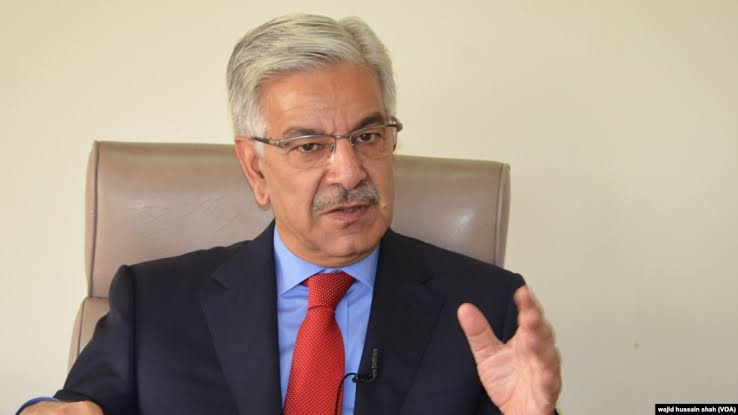
ISLAMABAD: Defence Minister Khawaja Asif has said he does not want to speculate about the possibility of PTI founder Imran Khan leaving the country, adding that such matters should be left to the courts.
Speaking on a Hum News programme, Khawaja Asif said legal avenues always existed against Supreme Court decisions and that it was not appropriate to declare any verdict completely unacceptable.

He said the decision also had a historical context, recalling that the PML-N had approached courts for its leader around five years ago. He also referred to the execution of former prime minister Zulfikar Ali Bhutto and the imprisonment of former president Asif Ali Zardari, saying such developments had occurred in Pakistan in the past.
Khawaja Asif said the Law Ministry would determine the government’s legal response to the latest court decision.
Regarding Imran Khan’s possible departure abroad, the defence minister said he did not want to make any predictions. “Such matters should be left to the courts,” he said, adding that statements about the issue could increase uncertainty.
Khawaja Asif claimed that, according to information available to him, Imran Khan’s eye had fully recovered and his overall health was “excellent.” He added that Khan could remain under observation at the hospital.
The minister also referred to an alleged undertaking submitted by Imran Khan’s sisters, saying that it was visible, while PTI leaders had avoided discussing the issue of meeting the party founder.
Government Faces No Threat, Says Khawaja Asif
Khawaja Asif rejected the impression that the government was facing a threat or that cracks had emerged within the coalition.
He said the system had not failed and claimed that even if the Pakistan Peoples Party withdrew its support, the government would still have a simple majority in Parliament.
Defending the government’s performance, he said the Punjab government was moving forward with what he described as strong performance, while economic conditions were improving, motorways were being constructed and work on schools and colleges was continuing.
He stressed the need for strong, functional local governments in every province so that cities could generate their own revenue and carry out development projects without constantly depending on the federal or provincial governments.
New Administrative Units Before Next Elections
The defence minister said Pakistan would not have to wait for the next general elections to decide on the creation of new administrative units, claiming that the matter would be settled before the elections.
He described the debate as constructive and said it should produce a concrete outcome.
“If some powers are transferred to administrative units or districts and new administrative units emerge, what is wrong with that?” he asked, stressing that improving public service delivery should be the priority.
Khawaja Asif said political considerations should not become an obstacle to administrative reforms.
He also criticized the failure to fully implement the spirit of the 18th Constitutional Amendment, saying considerable effort had gone into the amendment but several agreed provisions had not been implemented.
He noted that the Constitution provided for a local government system, but its spirit had not been implemented in practice.
According to Khawaja Asif, greater transfer of authority and resources to the grassroots level could have prevented many of the current debates over governance and administrative structures.