Islamabad Must Change Its Mindset on Balochistan, Says Dr Abdul Malik Baloch
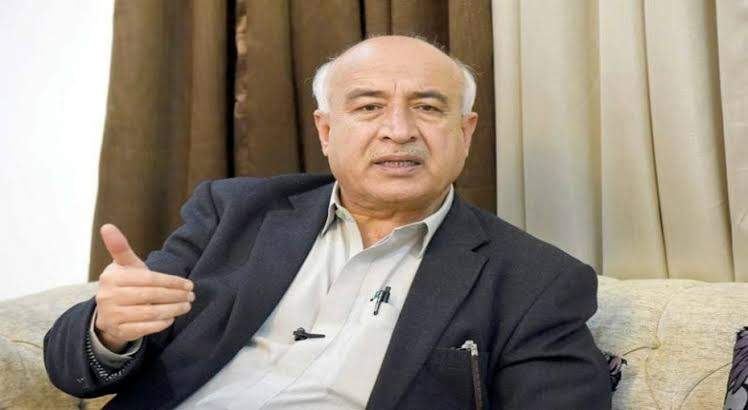
Quetta: Former Chief Minister of Balochistan and National Party leader Dr Abdul Malik Baloch has called on the federal government to change its approach towards Balochistan, stressing that lasting peace and stability can only be achieved by recognizing the people’s democratic mandate, provincial autonomy, and constitutional rights.
Speaking in an interview with a private television channel, Dr Baloch said that several individuals serving in the current provincial government are neither genuine workers of the Pakistan Peoples Party nor longstanding members of the Pakistan Muslim League, but politicians who switched loyalties to secure positions of power. He argued that this political trend has marginalized ideological and grassroots party workers.


He emphasized that Islamabad must revise its mindset regarding Balochistan and ensure that the people of the province are granted their constitutional right to vote, sovereignty over their resources, and meaningful political representation.
“The country’s affairs should be governed in accordance with the 1973 Constitution,” he said, urging the full implementation of the 18th Constitutional Amendment and the National Finance Commission (NFC) Award. He warned that if institutions other than elected representatives continue to influence governance, the country’s problems will persist.
Dr Abdul Malik Baloch stated that political parties with genuine public mandates in Balochistan have been overlooked, while some parties currently in government do not enjoy majority support among the electorate.
Commenting on Jamiat Ulema-e-Islam-F chief Maulana Fazlur Rehman, he described him as a senior political leader whose party holds 14 seats in the provincial assembly and occupies the position of Leader of the Opposition. He stressed that all political forces must contribute to resolving Balochistan’s challenges.
The former chief minister also expressed concern over what he described as the weakening of democratic institutions in Pakistan, noting that several senior politicians, including former Prime Minister Shahid Khaqan Abbasi, appear disillusioned with the prevailing political environment.
Referring to recent incidents of unrest in Ziarat and Hanna Urak, which reportedly claimed nearly 25 lives, Dr Baloch argued that registering criminal cases against protesters and using force cannot resolve political disputes. He maintained that political issues require political dialogue and democratic engagement.
He voiced serious concerns over the economic impact of border closures, stating that the shutdown of border crossings at Chaman, Taftan, Panjgur, Mashkail, and Gwadar has affected the livelihoods of an estimated two to 2.5 million people.
According to Dr Baloch, border trade has been a source of income for local communities for generations and should not simply be dismissed as smuggling. He urged the government to establish legal and regulated trade mechanisms and provide alternative employment opportunities if it seeks to curb illegal activities.
Discussing his party’s future political strategy, he said the National Party will continue its political activities across all four provinces and play an active opposition role in the Senate, National Assembly, and provincial legislatures wherever political space is available.
Dr Abdul Malik Baloch concluded that the solution to Balochistan’s longstanding issues lies not in the use of force or political engineering but in strengthening democracy, respecting provincial autonomy, and upholding the constitutional rights of its people.