Pakistan Plans New Auto Policy, Small Cars May Become More Affordable
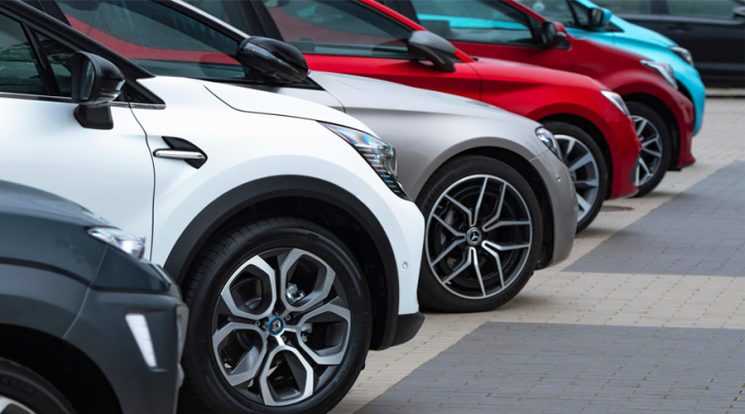
ISLAMABAD: The federal government is set to introduce a new auto policy in July, with proposals aimed at reducing the prices of small cars and promoting electric vehicles (EVs), officials told a meeting of the National Assembly’s Standing Committee on Industries and Production.
Under the proposed policy, the government is considering measures that could bring the price of small passenger cars down to between Rs2 million and Rs2.5 million. The policy will also focus on expanding electric vehicle adoption, developing charging infrastructure, and implementing broader reforms in the automotive sector.


The update was shared during a committee meeting chaired by Syed Hafeezuddin, where members discussed the proposed auto policy, vehicle pricing, EV standards, subsidies, and consumer protection.
During the briefing, the Secretary of the Ministry of Industries and Production said an auto policy committee, headed by Federal Minister Awais Leghari, has been directed by the prime minister to finalize its recommendations by July, after which the new policy is expected to be implemented.
According to officials, the policy will prioritize the local production of small cars and electric vehicles to make modern transportation more affordable for consumers.
The ministry also informed the committee that the government plans to establish 3,000 electric vehicle charging stations nationwide by 2030.
Officials said that during the current year, 160,000 electric motorcycles and 12,800 electric cars have been manufactured locally.
Committee members, however, raised concerns over the quality of locally manufactured electric motorcycles and their batteries.
Member of Parliament Muhammad Iqbal Khan said the quality of locally produced electric bikes is unsatisfactory, alleging that their batteries become unusable within a few months. He called for manufacturing standards to be brought in line with international benchmarks.
Another committee member, Abdul Hakim Baloch, also highlighted concerns over battery quality.
Committee Chairman Syed Hafeezuddin expressed concern over alleged irregularities in the distribution of subsidies for electric motorcycles. He said the Rs80,000 subsidy per motorcycle was reportedly not reaching consumers in Sindh and alleged that manufacturing licenses had been issued to some unrelated factories.
Following objections from committee members, the standing committee decided to establish a subcommittee to investigate the quality of electric motorcycles, battery standards, and the distribution of government subsidies.
Representatives of Proton Pakistan also briefed the committee, stating that 93 percent of the 816 affected customers had received refunds, with total repayments reaching Rs1.1 billion.
Committee member Mehreen Bhutto said the committee’s intervention had helped provide relief to affected consumers and expressed confidence that the effective implementation of the new auto policy would lower vehicle prices and promote greater competition in Pakistan’s automotive industry.