Pakistan Reaffirms Commitment to Indus Waters Treaty as Leaders Accuse India of Water Aggression
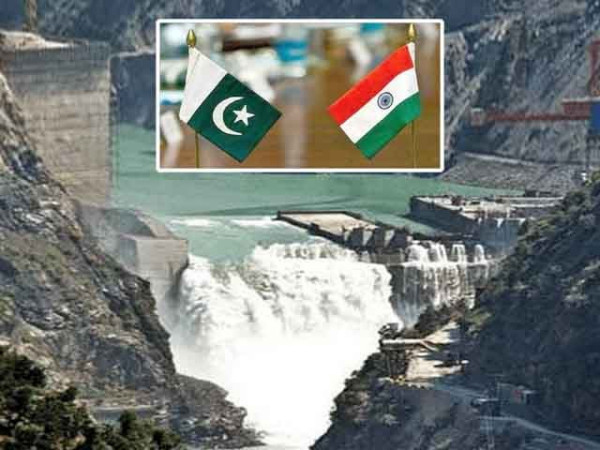
Islamabad: Senior government officials, legal experts and political leaders reaffirmed Pakistan’s commitment to the Indus Waters Treaty (IWT) at an international seminar in Islamabad on Tuesday, while accusing India of violating the agreement and attempting to use water as a strategic tool.
Addressing the seminar titled “Indus Waters Treaty: A Source of Peace and Regional Stability” at the Jinnah Convention Centre, Minister for Climate Change Musadik Malik alleged that India’s control over river flows had caused severe humanitarian consequences.

He claimed that nearly 6,000 people had lost their lives and thousands more had been injured due to what he described as India’s “water aggression,” adding that the scale of casualties exceeded those seen in some armed conflicts. Malik also accused India of manipulating water flows at the Marala Headworks and using water as a weapon rather than managing it cooperatively.
Minister for Information Attaullah Tarar described the Indus Waters Treaty as Pakistan’s “lifeline,” saying the agreement could neither be amended, suspended nor terminated unilaterally.
He said Pakistan would continue to defend its water rights at every international forum and maintained that previous attempts by India to unilaterally suspend the treaty had failed and attracted criticism on international legal platforms.
Tarar stressed that water is vital to the livelihoods of more than 240 million Pakistanis, particularly because agriculture remains the backbone of the country’s economy. He added that preserving the treaty has become even more important in the face of climate change, melting glaciers and growing water scarcity.
Syed Mehr Ali Shah, Pakistan’s Commissioner for the Indus Waters Treaty, said the agreement contains a comprehensive dispute-resolution mechanism and remains one of the strongest international water-sharing treaties. He noted that international arbitration bodies had twice clarified that India cannot unilaterally suspend or terminate the treaty or interfere with the natural flow of the western rivers.
Legal expert Ahmer Bilal Soofi argued that keeping the treaty in an “inactive” state is contrary to international law. He said water, air and food are universally recognized as fundamental human necessities and called for legal dialogue between Pakistan and India to address outstanding issues.
Speaking at the seminar, Bilawal Bhutto Zardari said water is not merely a geographical issue but one of food security, economic stability and human survival.
He warned that using waterways or maritime routes as political weapons poses a serious threat to regional and global peace. Bilawal said sustainable peace between Pakistan and India would not be possible without full implementation of the Indus Waters Treaty and emphasized that Pakistan’s rights over the waters of the Indus, Jhelum and Chenab rivers are protected under international law.
The seminar was attended by Defence Minister Khawaja Muhammad Asif, former ministers, legal experts, diplomats, water specialists and policymakers, who discussed the treaty’s importance for regional cooperation, water security and environmental sustainability.