Interest-Based Economy and Misplaced Priorities Are Pushing Pakistan Toward Crisis, Says Maulana Abdul Wasey
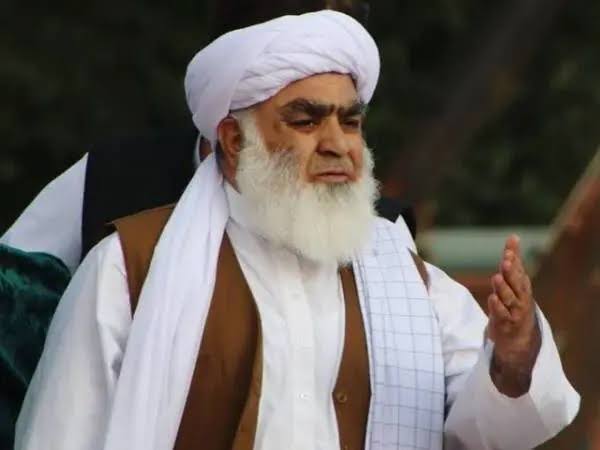
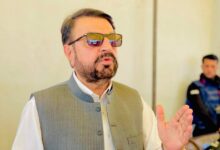
Quetta (Kudrat Daily) — Senator Maulana Abdul Wasey, provincial chief of Jamiat Ulema-e-Islam (F) in Balochistan, has said that Pakistan’s ongoing economic and political crises stem from an interest-based economic system, disregard for the public mandate, and misguided national priorities.
In a statement, he said that JUI-F chief Maulana Fazlur Rehman has consistently advocated for governance based on Islamic principles and the establishment of an interest-free economy. He added that efforts were made during constitutional reforms to promote the elimination of interest-based financial practices and the implementation of an Islamic economic framework.
Criticizing the federal budget for 2026–27, Abdul Wasey stated that while the federal budget stands at approximately Rs18.8 trillion, Pakistan’s total debt has reached Rs82 trillion. He noted that around 43 percent of the budget, or Rs8.054 trillion, will be spent on debt servicing alone.
He argued that when a significant portion of national resources is allocated to interest payments, fewer funds remain available for education, healthcare, employment, industry, agriculture, and public welfare. According to him, the allocations for higher education, school education, health, and science and technology demonstrate that the country’s future is not being prioritized.
The senator further said that the public has the right to question the consequences of ignoring the people’s mandate, adding that Pakistan is facing challenges related to law and order, economic instability, declining investment, unemployment, and rising inflation.
Abdul Wasey maintained that the interest-based economic system is not only contrary to Islamic teachings but also contributes to economic exploitation, social inequality, and financial dependence. He said the growing debt burden has affected Pakistan’s economic sovereignty and long-term stability.
Referring to Balochistan, he said that despite being rich in natural resources, the province’s people continue to lack basic facilities. He noted that many children remain deprived of quality education, adequate nutrition, and modern healthcare services, while basic necessities are still unavailable in several areas.
He called on the government to prioritize public welfare, Islamic economic principles, fair distribution of resources, and the development of underprivileged regions, particularly Balochistan, warning that failure to do so would deepen poverty, deprivation, and public dissatisfaction across the country.