Green Turban Attributed to Prophet Muhammad (PBUH) Inspires Devotion, Scholars Cite Historical Context
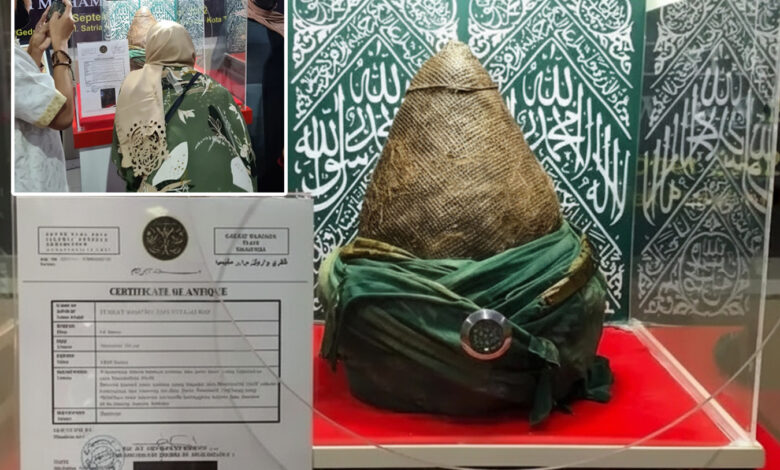
ISLAMABAD: A renewed public interest in a green turban attributed to Prophet Muhammad (peace be upon him) has stirred emotions of love and reverence among believers, while scholars emphasize the importance of relying on authentic historical and religious sources.
According to established traditions, the Prophet (PBUH) preferred white clothing, though there are narrations indicating that he also wore green garments on certain occasions. One روایت mentions that he delivered a sermon while wearing two green sheets, which has contributed to the association of the color with devotion.
Islamic scholars note that while love for the Prophet (PBUH) inspires some followers to wear green turbans, there is no definitive historical evidence confirming that a specific green turban is directly preserved or attributed to him.
References in the Quran describe green garments as attire for the people of Paradise, particularly in Surah Al-Kahf and Surah Al-Insan. This has further strengthened the symbolic importance of the color green in Islamic culture as a sign of blessing and spirituality.
The green dome over the Prophet’s mosque in Medina has also played a key role in reinforcing this association, becoming a widely recognized symbol of love and connection with the Prophet (PBUH).
Historians also point out that several relics believed to be associated with the Prophet (PBUH), including garments and swords, are preserved in museums such as those in Istanbul. However, accounts suggest that turbans attributed to that era were typically white or light-colored rather than distinctly green.
Experts advise that while expressions of محبت and عقیدت are deeply rooted in faith, they should be guided by authentic teachings and verified historical evidence.