Silence on Imran Khan’s Birthday and Greeting for Salman Butt: Allegations of Political Interference in Cricket Gain Strength Against PCB
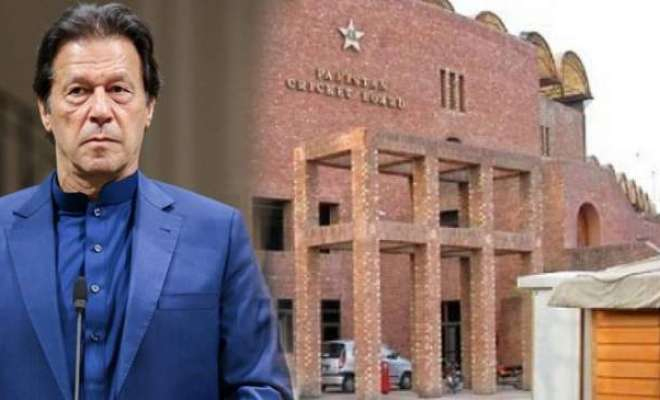
Lahore (Qudrat Daily): In Pakistan’s cricket history, October 5 is not merely the birthday of a former player. It is the birth date of the captain under whose leadership Pakistan won the Cricket World Cup for the first time in 1992. However, on October 5, 2026, Imran Khan’s 74th birthday, the absence of any prominent birthday message for him on the Pakistan Cricket Board’s official social media accounts has once again raised the question: is the line between cricket and politics in Pakistan becoming increasingly blurred?
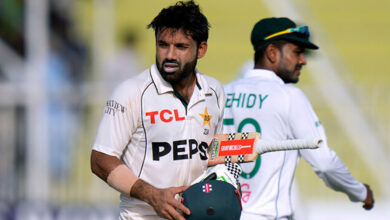
Social media users expressed displeasure and regret over the PCB’s official X account wishing former captain Salman Butt, who was involved in spot-fixing, a happy birthday while not extending birthday wishes to Imran Khan.


This matter is also significant because Imran Khan is not merely a former captain of Pakistan but is himself among the founding members of the Pakistan Cricket Board’s Hall of Fame. According to the PCB’s own website, the purpose of the Hall of Fame is to pay tribute to Pakistan’s greatest cricketers and preserve Pakistan’s cricket history. Its initial six members included Hanif Mohammad, Imran Khan, Javed Miandad, Wasim Akram, Waqar Younis, and Zaheer Abbas. That is, the personality whom the board counts among Pakistan’s greatest cricketers in its official history — the board’s silence on his birthday has given rise to questions.
135 appearances for Pakistan
5,209 runs including 11 centuries in international cricketHappy birthday @im_SalmanButt https://t.co/TZlmVlS1Nb
— Pakistan Cricket (@TheRealPCB) October 7, 2026
Any opinion can be held about Imran Khan regarding politics, but his cricket record cannot be altered through political affiliation. Imran Khan played 88 Tests for Pakistan, scored 3,807 runs, and took 362 wickets. In 175 ODI matches, he scored 3,709 runs along with 182 wickets. He is also included in the ICC Cricket Hall of Fame. The biggest moment of his career was the 1992 World Cup. Pakistan defeated England in Melbourne to win its first ODI World Cup, and Imran Khan was the captain of that team. According to ESPN statistics, Imran Khan also scored 72 runs in the final, which was the highest individual score of Pakistan’s innings. This is why ESPNcricinfo’s October 5 “On This Day” list highlights Imran Khan’s birth and counts him among Pakistan’s greatest cricketers.
This contradiction is the primary reason for the debate on social media. On one hand, international cricket platforms are remembering Imran Khan’s cricket career, all-round performance, and 1992 leadership; on the other hand, the institution of which Imran Khan is a permanent part of history showed silence on his birthday. Here, the issue is less about wishing or not wishing a politician and more about institutional consistency.
The PCB has in the past posted tributes on former Pakistani cricketers’ birthdays with their pictures, statistics, and achievements. If the same tradition is followed for other former cricketers, then asking the reason for silence in the case of the former captain who won Pakistan a World Cup is not an unusual question. This debate is not limited to today’s birthday post alone.
On August 27, 2026, during the second Test between Pakistan and England at Lord’s, Sky Sports broadcast an interview with Imran Khan’s sons, Sulaiman and Qasim Khan. The interview was conducted by former England captain Michael Atherton, and it discussed the sons’ concerns regarding Imran Khan’s health and conditions in jail. According to multiple sources including Dawn, The Guardian, and Wisden, the PCB formally complained to Sky Sports about the broadcast of the interview. Reports also revealed that the board had considered the possibility of the Pakistani team not returning to the field after lunch if the interview was aired. Ultimately, the interview was broadcast and the Pakistani team also returned to the field.
In this entire debate, a fundamental institutional question emerges. The PCB’s job is to manage cricket in Pakistan, develop it, and preserve the national cricket heritage. Therefore, keeping a former cricketer’s current political status separate from his cricket record could be considered important for the institution’s impartiality.
Imran Khan is a former Prime Minister of Pakistan and the founder of Tehreek-e-Insaf, so his name is also linked to Pakistan’s intense political polarization today. But his political identity does not erase his international cricket career from 1971 to 1992 or the 1992 World Cup from the historical record. Interestingly, the PCB itself still prominently maintains Imran Khan’s name on its Hall of Fame website.
In this matter, the dual official status of PCB Chairman Mohsin Naqvi also comes into discussion. Mohsin Naqvi was elected PCB Chairman in February 2024 for a three-year term. He is also the Interior Minister in the current federal government. That is why when any PCB decision appears to relate to a government-opposing political leader like Imran Khan, the question of political interference arises more strongly.
Perhaps the real question is not why Imran Khan was not wished a happy birthday. The real question is: should a national sports institution’s historical attitude change according to a player’s current political status? Governments change, political parties come to power and go, but the historical record of sports remains permanent.
Imran Khan may be a controversial figure in politics; supporting or opposing his politics is the right of Pakistani citizens. But in Pakistan’s cricket record, he is the all-rounder who played 88 Tests, took 362 Test wickets, and the captain who won Pakistan the 1992 World Cup.
That is why the PCB’s silence on October 5 is no longer just a matter of a “Happy Birthday” post. It has once again revived the broader debate about how far the Pakistan Cricket Board should remain separate from political conflict and how consistent and impartial it should be regarding its cricket heritage.
Perhaps the simplest principle for the PCB should also be this: a player’s cricket record should be kept separate from his politics.