Asad Qaiser Responds to Khawaja Asif, Says ISI Officials Were Providing Input on FATF-Related Bills
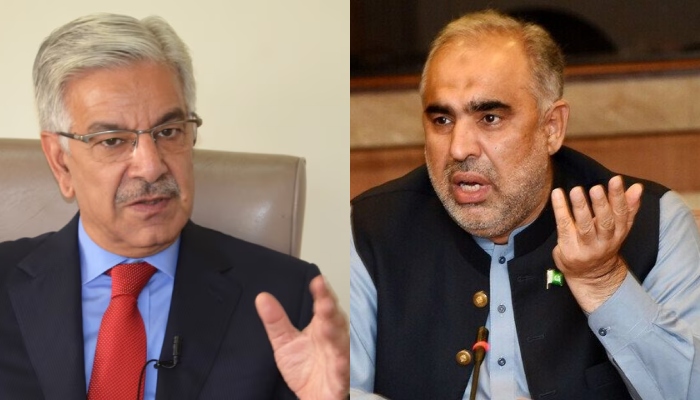
ISLAMABAD: Former National Assembly Speaker Asad Qaiser has responded to Defence Minister Khawaja Asif’s remarks regarding meetings held during the Pakistan Tehreek-e-Insaf (PTI) government, saying that intelligence officials present at those meetings were only providing technical input on legislation related to the Financial Action Task Force (FATF).
Speaking in the National Assembly, Qaiser said Khawaja Asif had claimed that meetings involving ISI officials were held at his residence. He clarified that the venue in question was not his personal home but the official residence of the Speaker of the National Assembly.

“I was facilitating discussions between the government and the opposition on FATF-related legislation,” Qaiser said. “The ISI officers present were providing their input on anti-money laundering and FATF-related bills.”
His comments came a day after Khawaja Asif stated in the National Assembly that lawmakers had worked on legislative amendments, including the Anti-Money Laundering Bill, in the presence of ISI officials during meetings held at the Speaker’s residence.
Responding further, the PTI leader questioned Khawaja Asif’s remarks about wanting to ease the burden on his conscience by revealing the information.
“If Khawaja Asif is talking about the burden on his conscience, then he should explain whether the February 8, 2024 elections are not a burden on his conscience,” Qaiser said.
He also referred to Khawaja Asif’s electoral contest, alleging that the defence minister had lost by a significant margin to PTI-backed candidate Rehana Dar.
Qaiser challenged the minister to resign from what he described as a “stolen seat” if he genuinely wished to relieve his conscience and contest a fresh election against Rehana Dar.
The exchange marks the latest episode in an ongoing political confrontation between government and opposition members during the current National Assembly session, where budget discussions have frequently been accompanied by sharp political criticism from both sides.