Supreme Court Clarifies Jurisdiction Between Apex Court and Federal Constitutional Court After 27th Amendment
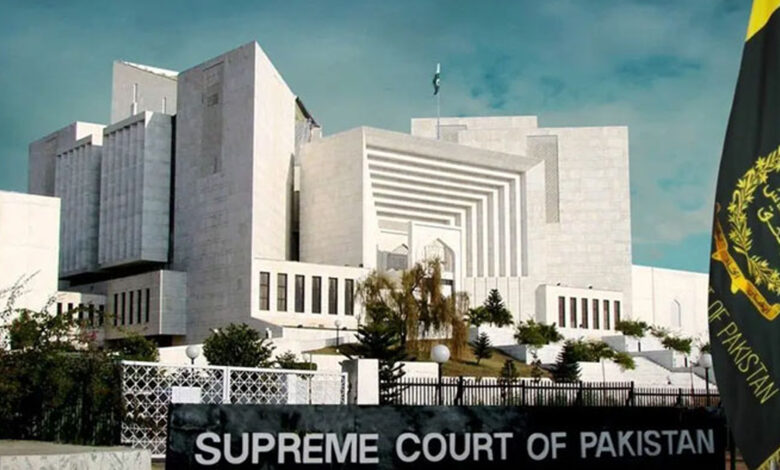
ISLAMABAD: The Supreme Court has issued a detailed written judgment defining the jurisdiction of the Supreme Court and the Federal Constitutional Court following the 27th Constitutional Amendment.
A two-member bench headed by Chief Justice Yahya Afridi issued the decision in a case concerning the scope of authority between the two constitutional forums.


The judgment states that the Supreme Court of Pakistan and the Federal Constitutional Court are not subordinate to each other and operate as co-equal courts. It further clarifies that rulings of the Federal Constitutional Court on legal principles will be binding on other courts.
The court observed that Article 189 does not place one court under the authority of another. It also noted that combining constitutional and non-constitutional matters may create legal complications, therefore such cases should be separated and heard in their respective forums.
According to the ruling, constitutional matters will fall under the jurisdiction of the Federal Constitutional Court, while regular civil and appellate cases will continue to be heard by the Supreme Court. To avoid conflicting judgments, both courts are expected to follow the principle of judicial comity and respect each other’s decisions.
The judgment further explains that appeals under Article 199 will be heard by the Federal Constitutional Court, while ordinary civil appeals will remain with the Supreme Court. Following the 27th Constitutional Amendment, the Federal Constitutional Court has been granted exclusive constitutional jurisdiction.
The court also directed that appeals arising from constitutional decisions of High Courts will be transferred to the Federal Constitutional Court, while certain matters such as tenancy and family disputes are excluded from its jurisdiction.
Additionally, the court ruled that contempt proceedings will be heard by the court whose order has been violated, reaffirming that contempt powers are linked to judicial authority and enforcement.