Achakzai Criticizes State Institutions, Calls for Constitutional Supremacy and Imran Khan’s Release
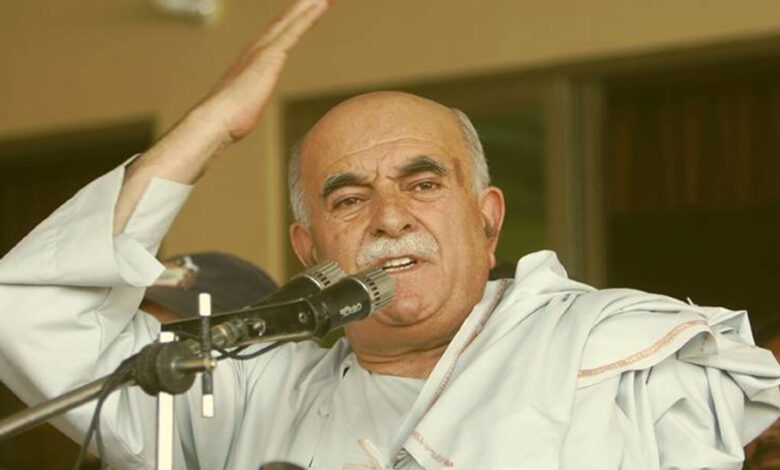
Lahore/Quetta:** Chairman of the Pashtunkhwa Milli Awami Party and head of the Tehreek Tahafuz Ayeen Pakistan, **Mahmood Khan Achakzai**, has strongly criticized state institutions, claiming they are no longer functioning effectively and urging the restoration of constitutional supremacy in the country.
Speaking to journalists, Achakzai said that all institutions have “collapsed” and alleged that civilian bodies are being undermined. He stressed that no individual is greater than Pakistan, adding that governance must be based on the Constitution, with Parliament as the supreme authority.

He warned that blocking the Constitution is equivalent to weakening the foundations of the state, stating that injustice cannot sustain a country. Achakzai also criticized what he described as the presence of uniformed influence in civilian institutions, calling it a matter of concern.
Commenting on political developments, he said that politics in Pakistan is inconceivable without former Prime Minister **Imran Khan**, asserting that sidelining him would be unrealistic. He described Khan as the most popular leader in the country and pledged continued support, urging workers, farmers, and all segments of society to join efforts for his release.
Achakzai further called for peaceful political struggle, saying his party would organize rallies and protests without resorting to abusive language. He cautioned against the use of force, warning that conflicts between the public and state institutions could have serious consequences.
He also criticized foreign and domestic policies, alleging that wrong decisions have pushed the country toward instability. He emphasized the need for dialogue, equitable distribution of resources, and respect for the rights of all federating units, warning that failure to address these issues could lead to further unrest.
Achakzai concluded by urging authorities to avoid policies that could deepen divisions and instead work toward unity, justice, and constitutional governance.