Mustafa Kamal Says Powers ‘Parked’ with Chief Ministers, Local Governments Still Deprived Despite 18th Amendment
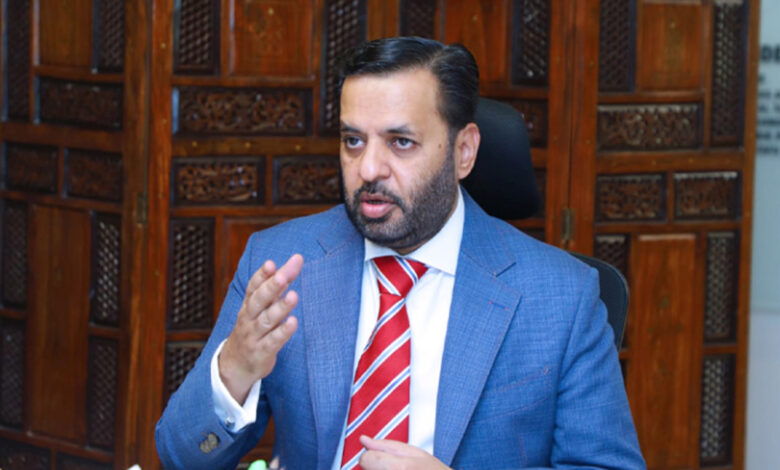
Islamabad: Federal Health Minister and Muttahida Qaumi Movement (MQM) leader Mustafa Kamal has said that although powers were transferred from the federation to the provinces under the 18th Constitutional Amendment, these powers were never devolved further to the district and local levels over the past 18 years, depriving the public of real benefits.
He said that powers have effectively been “parked” with provincial chief ministers, despite Article 140-A of the Constitution clearly mandating the empowerment of local governments.


Mustafa Kamal stated that when powers were not transferred to the grassroots level, the matter was taken to the Supreme Court of Pakistan. The apex court clearly defined which departments should fall under local governments and how funds should be allocated to mayors, town councils, and union councils. However, he lamented that even this Supreme Court verdict was not implemented in practice.
The MQM leader revealed that ahead of the 2024 general elections, his party prepared an eight-page constitutional draft providing a clear and unambiguous interpretation of Article 140-A. He said all political parties were consulted during its preparation and it was made part of MQM’s election manifesto.
He claimed that for the first time in its 40-year history, MQM joined the government on a single-point agenda—constitutional amendment—without demanding any ministry. According to him, the Pakistan Muslim League-N (PML-N) formally agreed to the draft in writing, after which MQM joined the government.
Referring to constitutional developments, Mustafa Kamal said MQM’s proposals could not be included during the 26th Constitutional Amendment due to opposition from the Pakistan Peoples Party (PPP). He added that the prime minister later assured MQM that its proposals would be incorporated into the 27th Constitutional Amendment and reiterated this commitment.
The federal minister said that prior to the 27th amendment, the federal cabinet unanimously approved MQM’s proposals, while the Punjab Assembly also passed them unanimously and forwarded them to the federation, with all parties—including the PPP—present.
However, he alleged that resistance emerged in the Parliamentary Standing Committee on Law and Justice, where PPP members opposed the move and warned they would not vote on other key constitutional matters if MQM’s proposals were included in the 27th amendment.
Expressing concern over governance failures, Mustafa Kamal said that had the amendment been passed, powers and resources could have reached the doorsteps of Pakistan’s 250 million people, significantly improving governance. He pointed to incidents of children falling into open drains, fatal traffic accidents, and daily reports of deaths across cities as evidence of administrative breakdown.
He further complained that whenever he raises questions about current misgovernance, attempts are made to silence him by referring to past events, which he described as a tactic to divert attention from present failures.