The Importance of Teeth in Animal Sacrifice for Eid ul-Adha
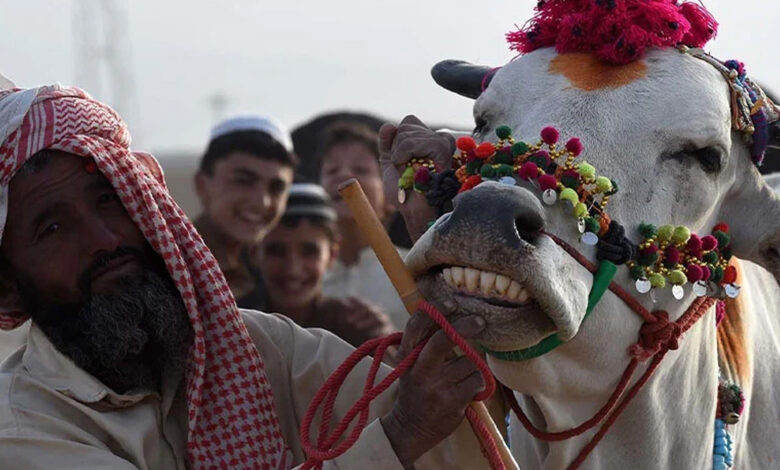
Every year, Muslims around the world observe the tradition of animal sacrifice during Eid al-Adha, following the Sunnah of Prophet Ibrahim. A significant aspect of the sacrifice involves selecting a beautiful and healthy animal, but the most important factor in determining the suitability of an animal for sacrifice is its teeth.
In accordance with Islamic tradition, an animal must be at least 2 years old (having 2 teeth) to be eligible for sacrifice. Animals with 4 teeth, which are approximately 3 years old, are less expensive than 2-year-old animals. Similarly, those with 6 teeth have a lower price, and the cheapest are the animals with 8 teeth, known as “Kanal” animals.


At birth, an animal has a set of 8 milk teeth. By the time a goat reaches 14 months, the first two milk teeth from the front fall out, making space for the permanent teeth. Such goats are referred to as “Donda” and are highly preferred for sacrifice.
For bulls, the age requirement for sacrifice is also 2 years. After reaching 2 years and 3-4 months, the bull starts shedding its milk teeth and grows its permanent teeth. First, one tooth falls out, followed by the other, over a period of 2-3 months. Once the permanent teeth are fully grown, the animal is considered “Donda.” These animals are slightly less expensive than younger ones.
Approximately 4-5 months after the appearance of the permanent teeth, the animal will start shedding one of the smaller teeth on the side, and a new permanent tooth will emerge. This is when the animal becomes “Choga” (with 4 teeth). The price of a Choga animal is usually lower than that of a Donda.
Experts suggest that after growing 4 permanent teeth, an animal reaches the age of 3 years, and a smaller goat reaches around 2 years. People generally believe that the meat of older animals is tougher compared to younger ones, which is why the price of older animals is lower.
After the 4-teeth stage, 3-4 months later, the animal will shed another side tooth, and a new permanent tooth will emerge on the other side. This stage is called the “Chhaga” (6 teeth). As the animal approaches its older years, the final phase occurs, where both of its side teeth fall out after 4-5 months, and new permanent teeth grow in their place. Such an animal is referred to as “Kanal” or an old animal, typically around 4.5 to 5 years of age. These animals are kept for breeding purposes, as their teeth begin to fall out as they age.
The selection of animals based on their teeth not only reflects a traditional aspect of sacrifice but also affects the pricing of the animals in the markets.