Over Half of Budget Allocated to Debt Repayments, 118 Projects Shut Down: Ahsan Iqbal
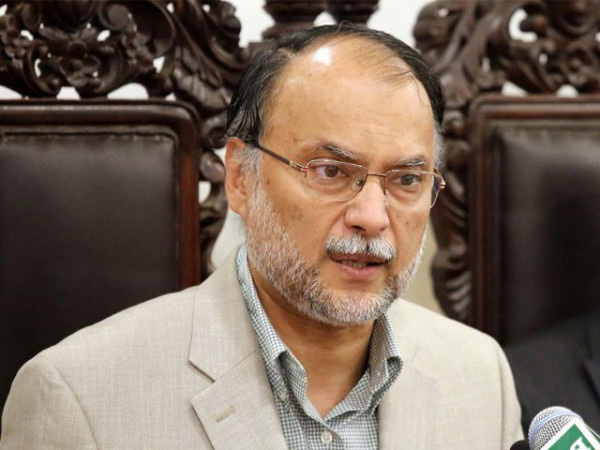
Islamabad: Federal Minister for Planning, Development and Special Initiatives Ahsan Iqbal has said that more than half of the national budget will be used for debt repayments, and over 118 low-priority or inactive development projects have been shut down due to financial constraints.
He was addressing a crucial meeting of the Annual Plan Coordination Committee (APCC), which he chaired. The meeting was attended by Federal Minister Khalid Maqbool, secretaries of various ministries, representatives of the State Bank of Pakistan, provincial governments, and heads of national and provincial institutions.
Chief Economist Dr. Imtiaz briefed the participants on the upcoming annual development plan, economic roadmap, and priority goals.
Ahsan Iqbal noted that economic challenges over the past few years have significantly reduced the Public Sector Development Programme (PSDP), which now poses a major obstacle to meeting the public’s expectations regarding improvements in healthcare, education, water, electricity, and infrastructure.
The development budget for the current fiscal year is set at Rs. 1,000 billion, but Iqbal admitted that it is not sufficient to accommodate all ministerial projects. He emphasized that this limited budget is a serious challenge to economic growth and public service delivery.
Iqbal stressed the urgent need to curb tax evasion and broaden the tax base, citing Pakistan’s low tax-to-GDP ratio as a major hindrance to national development. He called for a coordinated nationwide campaign to improve tax collection.
The minister explained that the closed 118 projects were either low priority or inactive, and that available funds are now being directed toward key national initiatives, especially those with foreign funding. He cited Diamer-Bhasha Dam, Sukkur-Hyderabad Motorway, Chaman Road, and Phase II of the Karakoram Highway as critical infrastructure projects essential for Pakistan’s future.
He also mentioned the “Uraan Pakistan” program, under which workshops are being organized across all provinces to promote national cohesion and unity.
Reflecting on the shift in priorities, Iqbal stated, “In 2018, we were thinking about launching new projects. Today, we are forced to make tough decisions to limit ongoing ones.” He added that increasing the development budget must remain a strategic goal, not a sacrifice.
He concluded by acknowledging the difficult choices made and extended an apology to any stakeholders whose projects could not be included, urging collective responsibility in navigating the country’s economic recovery.