Pakistan’s Decisive Response Reshapes South Asia’s Strategic Landscape: 16 Hours that Changed the Region
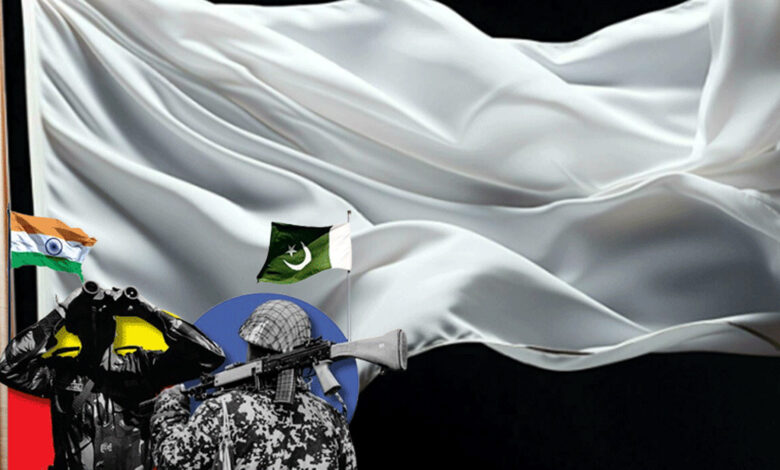
Islamabad:In what is now being termed a **historic strategic shift in South Asia**, Pakistan’s military response to Indian aggression on May 6, 2025, has led to a series of **military, diplomatic, and geopolitical outcomes** that have redefined regional power dynamics.
According to a detailed report released by the **Pakistan-China Institute** titled *”16 Hours That Changed South Asia”*, India’s failed attempt to establish a new normal through conventional military superiority was met with a **highly coordinated and technologically advanced counterstrike** by Pakistan.


In the initial phase, the **Pakistan Air Force (PAF)** successfully downed six Indian frontline aircraft, including 3 Rafales, 2 SU-30s, and 1 Mirage-2000. In the following days, Pakistan launched a **precision retaliatory strike** targeting 26 Indian military installations using a combination of **missiles, drones, and large-scale electronic warfare**, paralyzing Indian command-and-control systems.
Global reactions remained largely neutral, but subtle shifts in power alignment became evident. **China backed Pakistan’s position**, **Russia withheld its usual diplomatic support to India**, and **the United States** called for restraint from both nuclear neighbors, implicitly acknowledging Pakistan as an equal strategic actor in the region.
Most notably, **China declared India’s claim over Arunachal Pradesh (referred to as Zangnan by Beijing) invalid**, renaming 27 locations within the disputed territory—sending a clear message that it will not tolerate violations of its territorial claims.
The report highlights **three key strategic realities**:
1. **Deterrence between India and Pakistan in the conventional domain has been restored**.
2. **China has emerged as an informal guarantor of regional security**, especially in the Kashmir context.
3. **The U.S. now views both India and Pakistan through a more balanced lens**, weakening India’s bid for regional hegemony.
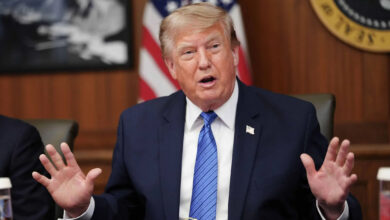
Former U.S. President Donald Trump further stirred the global discourse by praising Pakistan’s leadership and intelligence and offering to mediate the Kashmir dispute—reviving it as a **global issue rather than an internal Indian matter**.
India, which had been positioning itself as a counterweight to China in the Indo-Pacific, now finds its **strategic utility under question**, particularly in light of the demonstrated performance gap between **Western-supplied Indian hardware** and the **Sino-Pakistani tech advantage**.
The report concludes by calling this moment **“Pakistan’s finest hour,”** emphasizing the role of **national unity, military professionalism, and strategic clarity** in reshaping the regional balance. The fallout for India has been diplomatic isolation, internal political setbacks, and a weakening of its “Shining India” narrative.
—
Let me know if you’d like a **shorter version**, **print layout**, or **TV news script style**.